
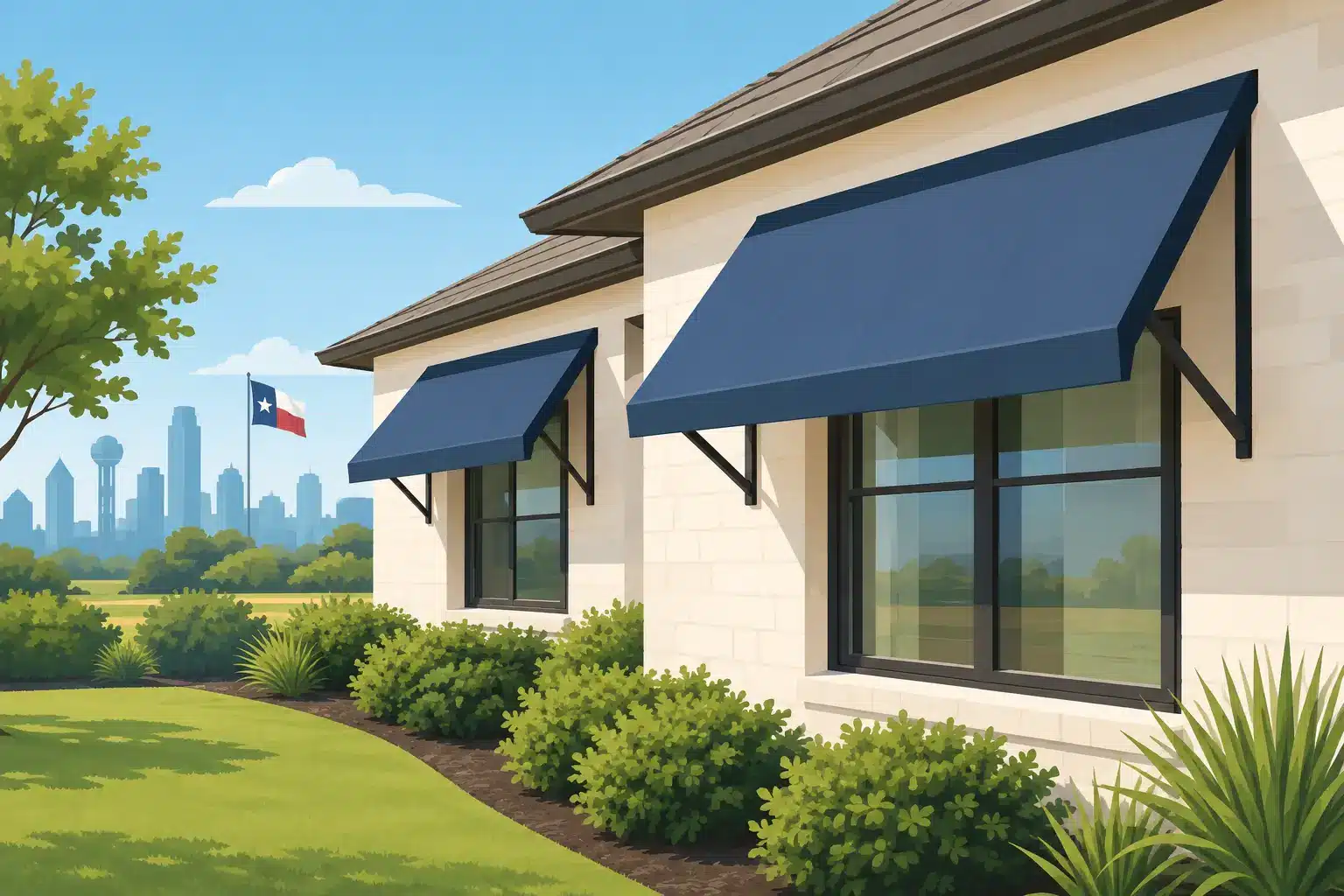
A west-facing window can turn a beautiful room into the one everyone avoids by midafternoon. The glare is harsh, the glass radiates heat, and even quality furnishings can fade faster than expected. Custom window awnings address that problem before sunlight reaches the glass, while giving the exterior of your home a more finished, intentional look.
For homeowners in The Woodlands and throughout Montgomery County, an awning is not simply an exterior accessory. It is a practical design decision for managing Texas sun, improving outdoor comfort, and adding character to the home. The best choice depends on your architecture, the direction each window faces, and how you want the space to feel inside and out.
What Window Awnings Can Do for Your Home
An awning creates shade over a window, reducing the direct solar heat and glare that enter the room. That can make a noticeable difference in kitchens, bedrooms, home offices, and living areas with intense afternoon exposure. Because the awning blocks sunlight outside the window, it can be especially effective during the long warm season we experience in Southeast Texas.
Comfort is only part of the benefit. Sunlight can gradually affect flooring, artwork, upholstery, and wood finishes. Window awnings help reduce that exposure while still allowing natural light into the room. They also provide a measure of protection from light rain at open windows, which can be welcome when the weather changes quickly.
From the street, an awning gives a window more presence and dimension. A thoughtfully selected fabric, frame, and shape can soften a brick facade, complement a traditional elevation, or add crisp contrast to a more contemporary home. Rather than treating every window exactly the same, a custom plan can prioritize the areas where shade and visual impact matter most.
Choosing the Right Style of Window Awnings
The right awning should suit the home first, then solve the sun problem. A product that looks charming on one house may feel undersized or overly decorative on another. During an in-home consultation, seeing color and material samples against your exterior finishes makes that decision far easier than choosing from a small screen image.
Fixed awnings for everyday shade
Fixed awnings remain in place year-round. They are a strong choice for windows that receive consistent sun and need dependable, continuous coverage. Their stable construction can also give a home a more architectural appearance, especially when several front-facing windows are treated in a coordinated way.
Fabric-covered fixed awnings offer color, pattern, and a traditional tailored look. Metal options tend to create a cleaner, more permanent profile and can be a good fit for certain home styles. The best material is not universal. It depends on the desired appearance, maintenance expectations, weather exposure, and the scale of the window.
Retractable awnings for flexible coverage
Retractable awnings are often associated with patios, but they can be useful where flexibility is the priority. When extended, they provide shade; when retracted, they preserve a more open exterior look and allow full sun during cooler months. Motorization can make operation especially convenient for hard-to-reach areas or homeowners who appreciate smart-home control.
That flexibility comes with a trade-off. Retractable systems require careful specification, appropriate mounting, and professional installation to perform as intended. They may not be the ideal answer for every window or exterior surface, particularly where a fixed shade structure would provide more dependable coverage.
Traditional, dome, and modern profiles
The profile changes the personality of the awning. Traditional slope styles work beautifully with many Colonial, Craftsman, and ranch-inspired homes. Dome and quarter-round designs can bring a softer, classic look to smaller windows, doors, or bays. Straight-edge, angular profiles often suit homes with cleaner lines and a more modern exterior.
Scale matters as much as shape. An awning should extend far enough to provide meaningful shade without looking too shallow or oversized. It also needs to relate well to shutters, trim, rooflines, light fixtures, and landscaping. This is where professional design guidance helps prevent a decision that seems right in a catalog but feels out of proportion once installed.
Start With Sun Direction, Not Just Curb Appeal
Before selecting colors or fabrics, consider when sunlight reaches each window. West-facing glass usually needs the most help in our area because late-day sun is intense and arrives when indoor temperatures are already high. South-facing windows can receive prolonged exposure, while east-facing windows may benefit from morning glare control in bedrooms and breakfast spaces.
An awning’s projection, angle, and placement determine how much shade it provides. A deeper projection can block more high summer sun, but the ideal dimensions depend on the window height and orientation. Overhangs, trees, neighboring homes, and existing porch structures can all change the calculation.
This is also why one-size-fits-all products are often disappointing. An awning that is too narrow may look attractive but leave the glass exposed when the sun is strongest. One that is poorly placed can interfere with trim, gutters, screens, or the operation of the window itself. Precise measurements are essential for a finished result that looks natural and functions well.
Materials and Colors That Hold Up Beautifully
Texas weather asks a lot of exterior products. Strong UV exposure, humidity, rain, wind, pollen, and seasonal temperature changes all influence how an awning should be selected and maintained. Quality outdoor fabrics are designed to resist fading and mildew, but they still benefit from occasional cleaning and care. Durable frames, secure mounting hardware, and proper drainage are equally important.
Color affects both style and performance. Lighter colors often reflect more heat and can feel fresh against stone, stucco, or painted siding. Darker solids may create a tailored, dramatic look but can show pollen or dust more readily. Stripes add personality and often suit traditional architecture, though a subtle pattern generally ages more gracefully than a very bold one.
A good starting point is to pull a color from the roof, brick undertones, front door, shutters, or existing outdoor furnishings. Matching everything exactly is rarely necessary. A coordinated contrast can look more polished and help the awning feel like a deliberate part of the exterior design.
Window Awnings and Interior Window Treatments Work Together
Exterior shade and interior window treatments serve different purposes, and many homeowners get the best result by using both. An awning reduces the amount of direct sun reaching the glass. Inside, shades, blinds, shutters, or drapery can fine-tune privacy, room-darkening, glare control, and decorative style.
For example, a sunny family room may benefit from an exterior awning to reduce afternoon heat, paired with solar shades that preserve the view while cutting residual glare. In a bedroom, an awning can ease morning heat while blackout shades handle sleep-friendly darkness. The combination can be especially helpful for large windows that are beautiful but challenging to manage during the hottest months.
There is no need to over-treat every opening. Rooms with natural shade from mature trees may need less coverage, while an exposed upstairs office may deserve more attention. The goal is a comfortable, cohesive home, not a collection of products added without a plan.
Why Professional Measurement Makes the Difference
Exterior installations involve more variables than many homeowners expect. Wall construction, trim depth, mounting clearance, drainage paths, window operation, and local wind exposure all matter. Proper installation protects the appearance of the home and helps the awning perform reliably over time.
Made in the Shade Woodlands brings product samples, design guidance, and technical expertise directly to your home, so you can compare options where they will actually be installed. Your consultant can assess sun exposure, take precise measurements, and help coordinate exterior shading with the interior treatments you may already have or plan to add. It truly could not be easier than seeing the possibilities in the space that needs them.
The most successful awning is the one you continue to appreciate after the first sunny afternoon and long after the initial installation. Start with the windows that make your home less comfortable, then choose a solution that respects both the Texas climate and the character of your home.

