A bedroom can have a beautiful dark paint color, plush bedding, and a quiet corner of the house, yet still feel wide awake at sunrise when light spills around the windows. Choosing the best shades for bedroom darkness is less about finding the heaviest-looking fabric and more about addressing the entire window: the shade material, how it fits, where light can leak in, and how you use the room.
For homeowners in The Woodlands and Montgomery County, that decision often has another layer. Our bright Texas mornings and strong afternoon sun can make bedrooms warmer, create glare, and interrupt sleep schedules well before anyone is ready to get up. The right custom shade can make the room feel calmer at night, more comfortable during the day, and far more finished from a design standpoint.
What “Darkness” Really Means in a Bedroom
Blackout and room-darkening are often used as though they mean the same thing. They do not. A room-darkening fabric significantly reduces incoming light, but you may still see a soft glow through the material or around its edges. Blackout shades use an opaque fabric or liner designed to stop light from passing through the shade itself.
Even a true blackout fabric cannot eliminate every trace of daylight if there are open spaces around the treatment. Light commonly enters at the top, sides, and bottom of a shade, particularly with an inside-mounted treatment that sits within the window frame. That is why product selection and precise measuring belong in the same conversation.
For most bedrooms, the goal is not necessarily pitch-black conditions at noon. It is dependable light control for sleeping, sleeping later on weekends, helping children settle at bedtime, reducing glare, and creating privacy after dark. The best solution depends on which of those needs matters most.
The Best Shades for Bedroom Darkness by Style
Blackout roller shades for the cleanest look
Blackout roller shades are often the strongest choice when a homeowner wants a streamlined appearance and serious light reduction. Their simple, flat profile works beautifully in contemporary bedrooms, updated traditional spaces, and rooms where the windows already have architectural detail worth showing off.
The key is choosing a true blackout fabric rather than a light-filtering or solar fabric. Solar shades are excellent for reducing glare while preserving a view, but they are not designed for bedroom darkness. For a more complete result, a cassette or fascia can conceal the roll at the top and reduce the light line that may appear there.
Roller shades are also an appealing option for motorization. With a button, remote, wall control, or compatible smart-home system, you can lower multiple bedroom shades at once without walking from window to window. That convenience is especially valuable for tall windows, hard-to-reach windows behind furniture, or a primary bedroom with several openings.
Blackout cellular shades for comfort and energy efficiency
Cellular shades, also called honeycomb shades, offer a softer look with practical insulation benefits. Their internal pockets trap air, helping reduce heat transfer through the glass. In a Texas bedroom that receives intense sun, that added insulation can support a more comfortable room temperature alongside your HVAC system.
For darkness, select a blackout cellular fabric rather than a light-filtering option. Cellular shades do a very good job of blocking light through the fabric, though some light may remain visible along the sides. They are particularly well suited to bedrooms where energy efficiency, a gentle fabric texture, and privacy are all priorities.
Top-down/bottom-up operation can be useful in certain bedrooms, but it involves a trade-off. It allows daylight from above while maintaining privacy below, which is ideal when darkness is not the only goal. If you want the room as dark as possible for sleep, a fully lowered blackout shade is the better choice.
Roman shades when you want softness without sacrificing function
A bedroom should not have to look purely functional to sleep well. Custom Roman shades bring tailored fabric, color, and pattern to the window, making them a natural fit for traditional, transitional, and layered interiors. With a blackout liner, a Roman shade can provide excellent room-darkening performance and a more decorative finish than a roller or cellular shade.
Because Roman shades stack in folds when raised, they can have a more substantial visual presence. This is a benefit in a bedroom that needs warmth or a focal point, but a consideration in smaller rooms where a minimal look is preferred. The fabric selection, liner, lift system, and mount all influence the final effect.
Dual shades for flexible daytime light control
Dual shades combine two fabrics in one treatment, typically a light-filtering layer for daytime and a blackout layer for nighttime. They are a smart answer for homeowners who want soft daylight and outward visibility during the day but need privacy and darkness when the day ends.
They are not always the darkest possible option because each system has its own construction and edge gaps. Still, for a bedroom used as a retreat, reading space, or work-from-home overflow area, dual shades offer flexibility that a single blackout shade cannot. A professional consultation can help determine whether the convenience is worth the modest compromise in total darkness.
The Detail That Changes Everything: Light Gaps
If you have ever installed an off-the-shelf blackout shade and wondered why the room still glows, light gaps are probably the reason. The fabric may be doing its job perfectly, while the opening around it is not.
An inside mount fits within the window frame and creates a clean, built-in appearance. It is often a great choice, but it requires enough depth and leaves narrow side gaps by design. An outside mount extends beyond the frame, covering more of the wall around the window. This can reduce side light dramatically and make a window appear larger.
For the darkest bedroom possible, consider an outside-mounted blackout shade or a carefully specified inside mount paired with drapery panels. Some rooms may benefit from side channels or specialty light-blocking systems. These are particularly useful for nurseries, shift-worker bedrooms, media rooms, and anyone highly sensitive to early morning light.
Accurate measurement matters here. Window frames are not always perfectly square, and trim, handles, recessed windows, and nearby furniture can affect what will fit and operate well. Custom measurements help avoid the small errors that become very noticeable at 6 a.m.
Layering Shades With Drapery
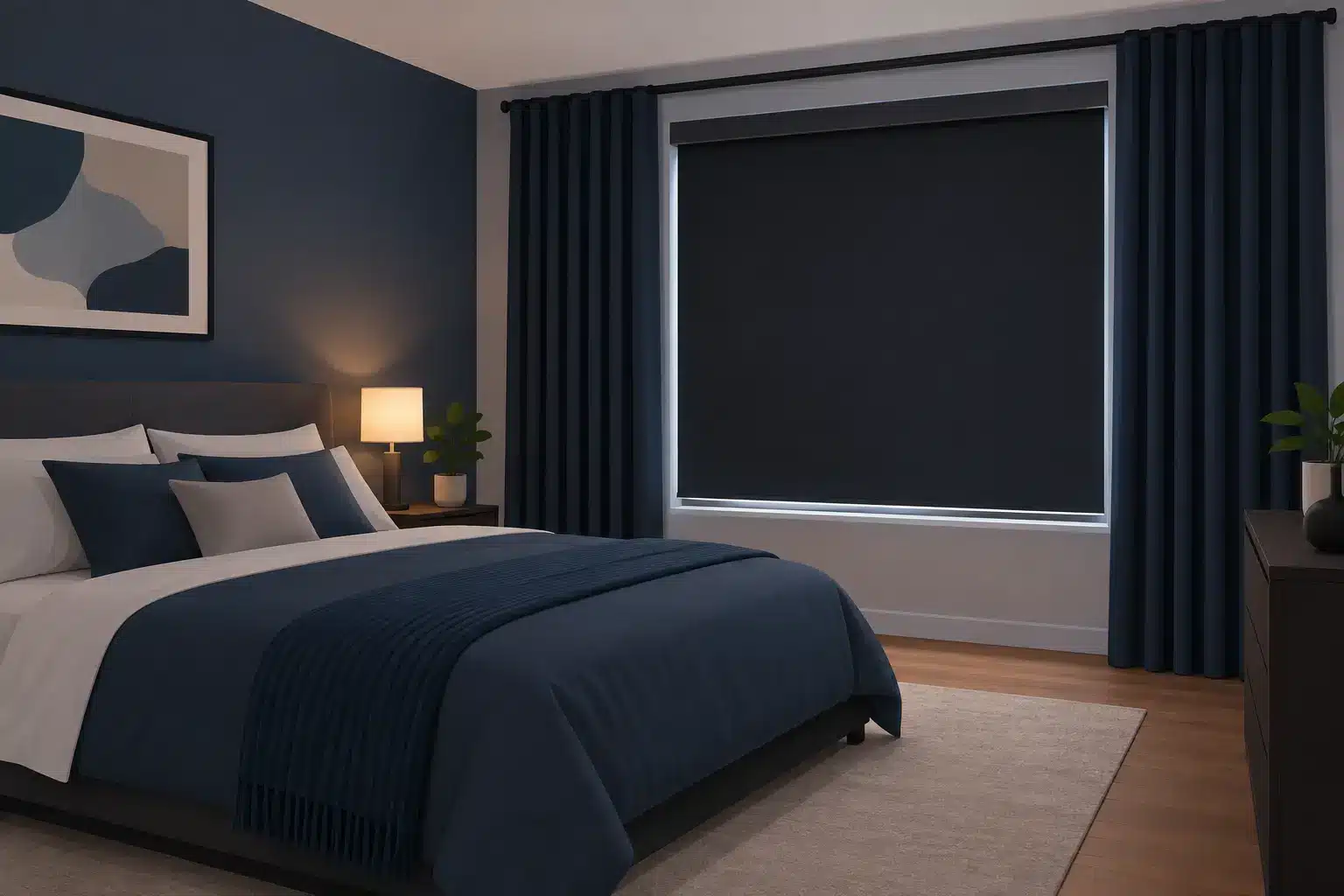
Layering is one of the most effective ways to combine darkness, design, and a more complete visual finish. A blackout roller or cellular shade handles the daily work of privacy and light control, while drapery panels soften the room and cover remaining edge light.
For the best result, choose drapery wide enough to extend beyond each side of the window and mount the rod high enough to reduce the light line at the top. Blackout-lined drapery provides an additional barrier, but even decorative side panels can improve the look of a shade installation and make the room feel more intentional.
This approach is especially popular in primary bedrooms. It allows a tailored blackout shade to disappear when raised, while the drapery adds texture, color, and hotel-like comfort. In children’s rooms, it can also create a cozy setting without requiring a dark, heavy fabric as the only visible treatment.
Don’t Overlook Safety and Daily Use
The shade that provides the most darkness is only a good choice if it works easily in real life. Cordless lift systems create a clean appearance and are a practical child-safe option. Motorization removes the need for cords entirely and makes it simple to set a bedtime routine, close shades before an afternoon heat buildup, or raise them gradually in the morning.
Battery-powered motorization can work well in many existing homes, while hardwired options may be considered during a renovation or new build. The right choice depends on the number of windows, access to power, desired control method, and how much automation you want.
Fabric color also deserves a quick mention. With a true blackout backing, the room-facing color has less effect on darkness than many homeowners expect. That means you can choose a soft neutral, a rich color, or a subtle pattern based on the room’s design rather than assuming black is the only practical option.
A Better Way to Choose Bedroom Shades
The strongest bedroom solution is usually not a product chosen from a small online swatch. It is a treatment planned around your exact windows, room orientation, furnishings, sleep habits, and design goals. A west-facing primary bedroom may need a different approach than an east-facing nursery or a guest room that only needs occasional privacy.
Made in the Shade Woodlands brings curated samples and professional guidance into your home, so you can see fabrics in the actual light they will live in. We can evaluate mounting options, explain where light may enter, and coordinate the finished treatment with your room rather than leaving you to guess from a screen.
A well-chosen blackout shade does more than make a room darker. It helps your bedroom feel like the restful, private place it is meant to be – whether the sun comes up early, the neighbors’ lights stay on late, or you simply want a better night’s sleep.

