
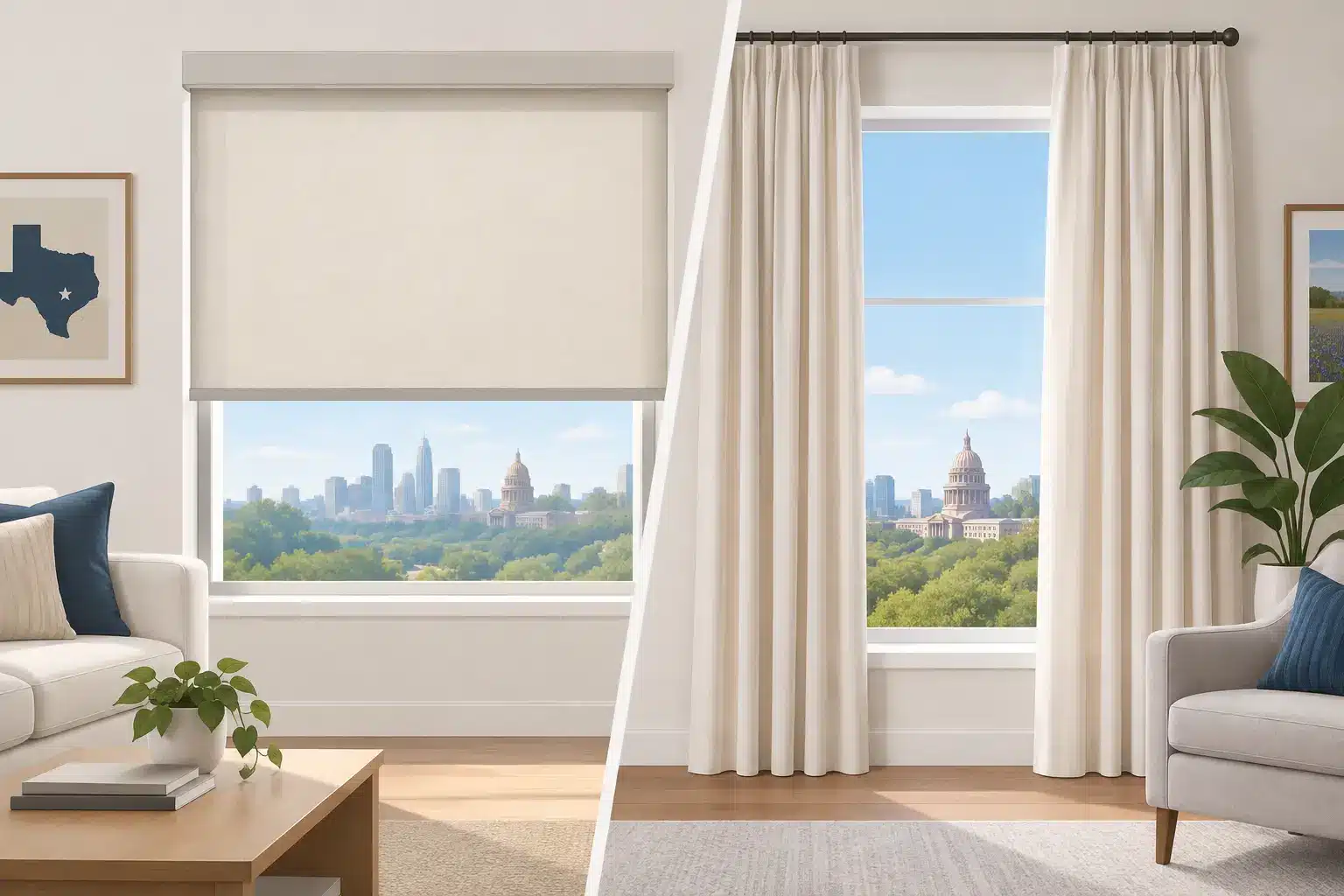
A west-facing living room in The Woodlands can be bright and beautiful at 4 p.m., then suddenly feel too warm to enjoy. That is where the shades versus drapery decision becomes more than a decorating choice. The right window treatment can soften harsh sun, protect furnishings, create privacy after dark, and make the room feel intentionally finished.
Both options can be custom-made around your windows, your lifestyle, and your design goals. The better fit depends on how you use the space, the architecture of the window, and whether performance, softness, or a balance of both is your priority.
Shades Versus Drapery: The Key Difference
Shades are fabric-based window coverings that raise, lower, or roll into a compact position. Depending on the style, they can filter daylight, block glare, provide room-darkening performance, or offer a clean view when raised. Roller shades, solar shades, Roman shades, cellular shades, and woven wood shades all bring a different look and level of function.
Drapery is made from fabric panels that hang beside or across a window. Panels can be stationary for a tailored decorative frame, or operable for adjustable privacy and light control. Pleat style, fabric weight, lining, hardware, and how high and wide the drapery is installed all shape the final effect.
In practical terms, shades tend to feel streamlined and architectural. Drapery introduces softness, movement, texture, and visual scale. Neither is automatically more upscale than the other. A precisely fitted custom shade can look exceptionally refined, while well-designed drapery can make a simple room feel layered and welcoming.
When Shades Make the Most Sense
Shades are often the first choice when the window itself is a focal point. They fit neatly within or near the window opening, so they preserve clean lines and do not compete with trim, built-ins, or a scenic backyard view. In contemporary homes, transitional interiors, and rooms with several windows, that restraint can be exactly what the design needs.
They are also highly practical for the Texas climate. Solar shades reduce glare and help manage heat while maintaining an outward view during the day. Cellular shades add an insulating air pocket, making them a smart option for bedrooms, upstairs rooms, and areas that receive sustained direct sun. Room-darkening and blackout shade options are especially useful in nurseries, media rooms, and bedrooms where better sleep is the goal.
Motorization is another reason many homeowners lean toward shades. A battery-powered or hardwired system can operate hard-to-reach windows, coordinate multiple treatments at once, and work with compatible smart-home controls. For tall foyer windows or banks of glass facing a patio, that convenience is hard to beat.
Shades are not always the answer, however. Even beautiful fabrics can appear more minimal than some formal dining rooms, traditional living rooms, or large primary suites call for. If a room needs warmth, dramatic height, or a stronger connection to upholstery and wall color, drapery may offer more design impact.
Where Drapery Brings Something Special
Drapery is often selected for the feeling it creates. Full panels can make ceilings appear taller when they are mounted close to the ceiling and extend to the floor. They can widen the visual presence of a modest window when the rod is carried beyond the frame. On expansive windows and sliding glass doors, drapery can turn a functional opening into a major design feature.
Fabric choice matters. Linen-like materials offer relaxed texture, while velvet and heavier woven fabrics feel more formal and can provide additional light control when lined. Sheer drapery softens strong daylight without closing off the room, which makes it a lovely option for living areas that need daytime privacy without losing brightness.
For homeowners concerned about comfort, lined drapery can help reduce heat transfer and soften outside noise. It will not replace a high-performance shade in every situation, but it adds a useful layer at windows that feel exposed or drafty. Blackout-lined drapery is a popular bedroom solution, particularly when paired with a shade behind it for flexible control throughout the day.
The trade-off is space. Drapery stacks to the sides of a window when open, so it needs wall room and careful planning around furniture, doors, and built-ins. It also involves more design decisions, from hardware finish to panel fullness. Professional measuring and installation are valuable here because an inch in the wrong place can change how the finished treatment hangs and functions.
The Strongest Choice Is Often Both
Many of the most polished rooms do not require choosing only shades or only drapery. Layering the two gives homeowners the performance of a shade with the softness of fabric panels. A solar shade paired with stationary drapery panels can manage glare while adding color and texture. A room-darkening shade behind blackout drapery gives a bedroom more dependable darkness and a more finished look.
Layered treatments are particularly effective on large windows, bedrooms, formal spaces, and open-concept homes where window coverings need to coordinate across several rooms. The key is giving each layer a job. The shade may handle privacy and daily light control, while the drapery adds scale, insulation, and a tailored design detail.
This approach does not have to feel overly formal. Simple ripple-fold panels with a woven shade can look relaxed and current. Roman shades paired with side panels can suit a traditional home without appearing heavy. The fabrics, hardware, mounting height, and fullness determine whether the finished look feels crisp, casual, dramatic, or understated.
Consider Each Room Before Deciding
A single treatment style does not need to appear in every room. Your primary bedroom may benefit from blackout shades and lined panels, while a breakfast nook may be best served by easy-to-operate woven shades. Bathrooms need privacy-conscious materials that stand up to humidity. In a home office, glare reduction may matter more than complete darkness.
For patio doors and exterior-facing rooms, think about how often the opening is used. Shades can be a clean solution for fixed windows, while drapery may be easier to move aside at a frequently used sliding glass door. Outdoor shades are another consideration for covered patios, where they can help cut glare, reduce heat, and make the space more comfortable during bright Texas afternoons.
Child safety and everyday maintenance should also influence the decision. Cordless and motorized options help create a cleaner, safer setup for homes with young children and pets. Fabric selection matters for busy households, too. Some materials are better suited to rooms where hands, paws, and everyday life are part of the picture.
Custom Details Make the Difference
Off-the-shelf treatments can offer a quick temporary fix, but windows are rarely as standard as they look. Trim depth, ceiling height, sill clearance, door handles, uneven openings, and the direction of the sun all affect what will work well. Custom solutions allow the treatment to fit the architecture rather than asking the architecture to accommodate the treatment.
That is why an in-home consultation is so useful. Seeing samples against your paint colors, flooring, furnishings, and natural light makes fabric and opacity decisions much easier. A trained consultant can also identify practical details early, such as whether a shade should be inside-mounted, whether drapery needs to clear a door, or whether motorization would make daily use more convenient.
Made in the Shade Woodlands brings curated options directly to your home, then handles precise measuring and professional installation. It truly could not be easier than making the decision with the actual room in front of you, rather than trying to judge a small swatch under store lighting.
If you are drawn to a clean, efficient look, start by looking at shades. If you want softness and a more decorative statement, explore drapery. And if your room needs both beauty and serious light control, let the window treatment do double duty with a thoughtfully layered design.

