A west-facing patio in The Woodlands can feel welcoming at breakfast and nearly unusable by late afternoon. Retractable patio awnings give homeowners a practical way to control that change in comfort without permanently closing off the view, darkening the home, or committing to a fixed roofline. With shade available when you want it and open sky when you do not, the patio becomes a more flexible part of everyday life.
For Texas homeowners, an awning is not simply a decorative finishing touch. The right system can reduce direct sun exposure, limit glare, help protect outdoor furnishings, and make it easier to enjoy dinner, homework, or a quiet cup of coffee outside. The key is choosing a custom solution that suits the patio’s orientation, structure, style, and the way your household actually uses the space.
Why retractable patio awnings work so well in Texas
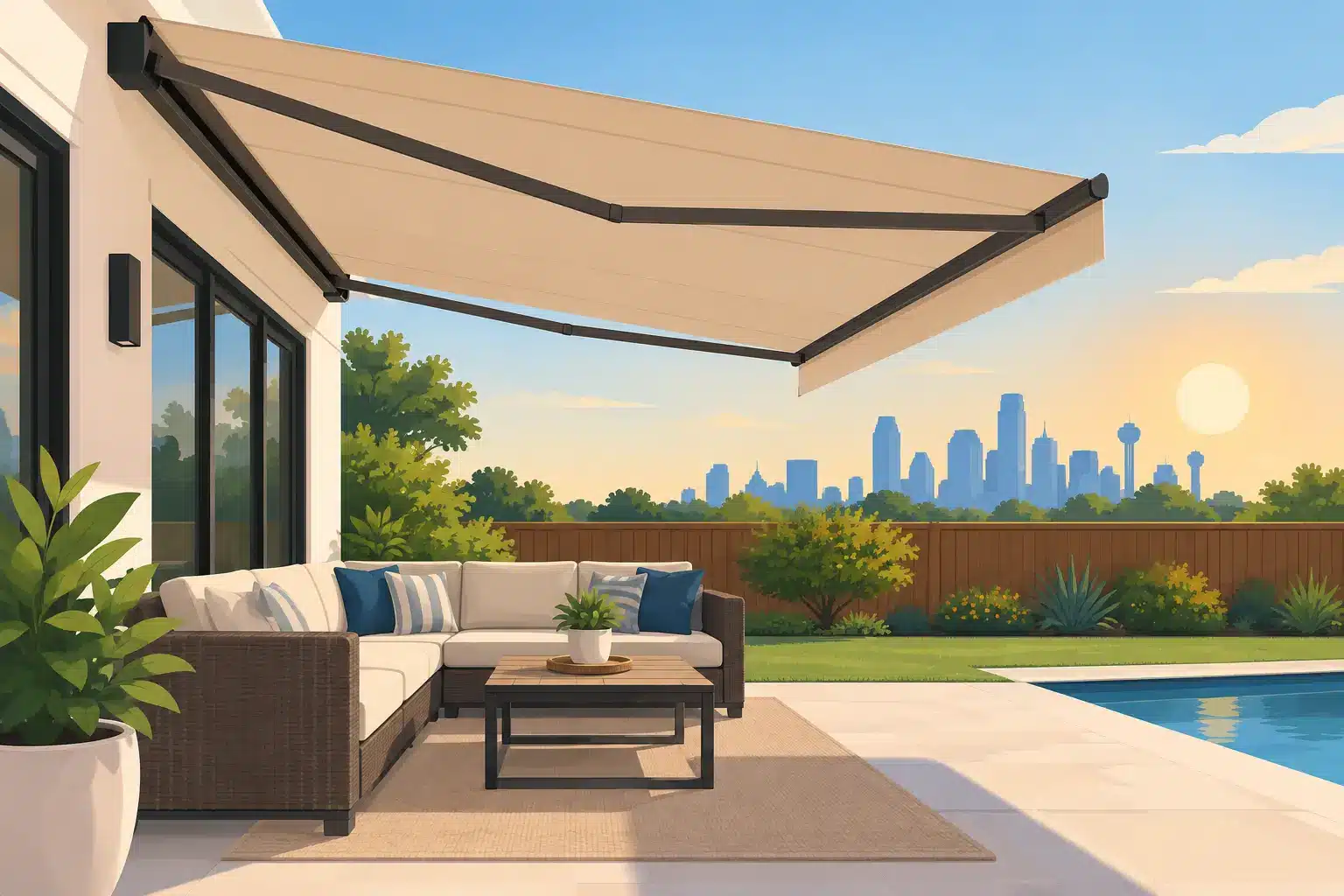
A fixed cover provides dependable shade, but it also changes the character of the patio all day, every day. Retractable awnings offer another option. When the sun is high or the patio is heating up, the awning extends to create a broad shaded area. When the weather is pleasant, the stars are out, or you want more natural light indoors, it retracts neatly toward the home.
That flexibility matters in Montgomery County, where a patio may face intense summer sun, sudden showers, pollen, and occasional wind. A retractable design lets you respond to the conditions rather than leaving a permanent structure to manage every season.
Many homeowners also appreciate how an awning preserves the connection between the house and yard. It can add useful shade without the visual weight of a large patio cover. This is especially appealing for homes with landscaped views, pools, mature trees, or architectural details worth keeping visible.
The comfort benefits go beyond shade
The first benefit most people notice is a cooler seating area. By intercepting direct sunlight before it reaches the patio surface, an awning can make outdoor furniture more comfortable to use and reduce the glare that makes even a shaded porch feel harsh. A quality fabric also helps filter UV exposure, which is valuable for family gatherings and for protecting cushions, rugs, and wood finishes from excessive fading.
An awning can also affect the rooms just inside the patio doors. When strong afternoon sun hits large panes of glass, it can raise glare and add heat to adjacent living spaces. Exterior shade helps block that solar heat before it reaches the glass. Results depend on the home’s insulation, window orientation, and glazing, but homeowners often find the nearby room more comfortable during the hottest part of the day.
Privacy is a different question. A standard retractable awning provides overhead coverage, not full side screening. If privacy, insects, or low-angle sun are major concerns, an outdoor shade may be a better companion product for one or more sides of the patio. The most satisfying outdoor spaces often layer these solutions rather than expecting one product to solve every need.
What to consider before choosing an awning
A retractable awning should be specified for the home, not selected solely from a photo or standard size chart. Several details determine whether it will look intentional, operate reliably, and provide the shade you expect.
Patio direction and the sun’s path
A south-facing patio receives different sun exposure than one facing west. A west-facing patio may need generous projection to block late-day glare, while a south-facing space may benefit from a carefully chosen pitch and fabric that manages overhead sun. Nearby trees, rooflines, and neighboring homes can change the equation as well.
During an in-home consultation, it helps to discuss when the patio is used most. A family that grills at 6 p.m. has different priorities from someone who enjoys a covered morning sitting area. This simple conversation often guides the best size and placement more effectively than measurements alone.
Mounting surface and precise measurements
Retractable awnings must attach to a suitable structural surface. The wall construction, roof overhang, brick, siding, trim details, and available mounting height all need to be evaluated before recommending a system. Proper mounting is not a place to guess. It affects the awning’s projection, clearance, appearance, and long-term performance.
Professional measurement also accounts for doors that swing outward, exterior lights, gutters, downspouts, ceiling fans, and landscaping. A custom fit should feel integrated with the home rather than squeezed into the available space.
Fabric color and performance
Fabric is where function and style meet. Lighter colors can create an airy look and reflect more light, while darker or richer colors may provide stronger glare control and a more defined outdoor ceiling. Patterned fabrics can add character and coordinate beautifully with patio cushions or exterior paint, though they may feel more visually prominent on a simple facade.
Color should not be chosen by appearance alone. A sample viewed in the shade can look very different in full Texas sun. Seeing options at your home, alongside the brick, trim, landscaping, and furniture, makes the decision much easier. It also gives you a better sense of how much light will filter through the material.
Manual or motorized operation
Manual awnings are a straightforward choice for homeowners who want dependable shade with a simple hand crank. Motorization adds everyday convenience, particularly for larger awnings or patios used often. With the touch of a button, you can extend shade before guests arrive or retract it when the sky changes.
Smart-home-compatible motorization can be especially useful for homeowners who already enjoy automated shades, lighting, or climate controls. Some systems can include wind sensing, which retracts the awning when conditions become too gusty. This is a helpful protective feature, but it is not a reason to leave an awning extended during severe weather or when the home will be unattended for long periods. Retractable awnings are shade systems, not storm shelters.
Awnings versus patio covers and outdoor shades
The best choice depends on what is missing from your outdoor space. A retractable awning is ideal when you want flexible overhead shade, open-sky options, and a streamlined look. It is often an excellent fit for patios where a permanent cover would feel too heavy or require a more involved construction project.
A fixed patio cover may make more sense when you need year-round shelter from light rain and continuous coverage regardless of wind or season. It is a more permanent architectural decision, however, and it can reduce daylight inside the home.
Outdoor solar shades are particularly effective for low-angle sun, glare, insects, and view-preserving privacy. They can be installed on porches, pergolas, and covered patios, but they do not create overhead shade on their own. For many homes, a retractable awning overhead and motorized outdoor shades at the sides create a comfortable, adaptable outdoor room.
Installation and care matter as much as the product
A well-made awning deserves equally careful installation. Correct bracket placement, secure fastening, proper pitch, and clean alignment affect how the system operates and how it looks from the yard and street. This is why a custom, professionally measured solution offers more confidence than an off-the-shelf model selected without a site review.
Routine care is refreshingly simple. Retract the awning during high winds, heavy rain, and storms. Let the fabric dry before closing it for an extended period when possible, and gently clear leaves or debris from the frame. Periodic inspection of the fabric, hardware, and motorized controls can help catch minor concerns early. Your product warranty and manufacturer care instructions should guide the details.
At Made in the Shade Woodlands, we bring fabric samples and product expertise directly to your home, so you can consider the awning where it will actually live. We can evaluate the mounting area, talk through motorization and companion outdoor shades, and help you choose a design that feels right for your home instead of settling for a one-size-fits-all answer.
The best patio shade is the kind you use without thinking twice. When your awning is sized correctly, installed with care, and chosen for the way you spend time outdoors, stepping onto the patio can become the easiest part of your day.

