The afternoon sun can turn a beautiful wall of windows into the hottest seat in the house. For homeowners in The Woodlands, that often means closing shades room by room, adjusting glare during dinner, and trying to keep bedrooms comfortable before bedtime. Motorized window shades replace those little daily chores with simple, tailored control – while adding a clean, polished finish to the room.
They are not just a smart-home upgrade for tech enthusiasts. The right motorized shade can make tall windows easier to live with, support privacy when you need it, help manage harsh Texas light, and make a home feel more thoughtfully finished. The key is choosing a system, fabric, and installation approach that work with the way your household actually lives.
What Motorized Window Shades Do Well
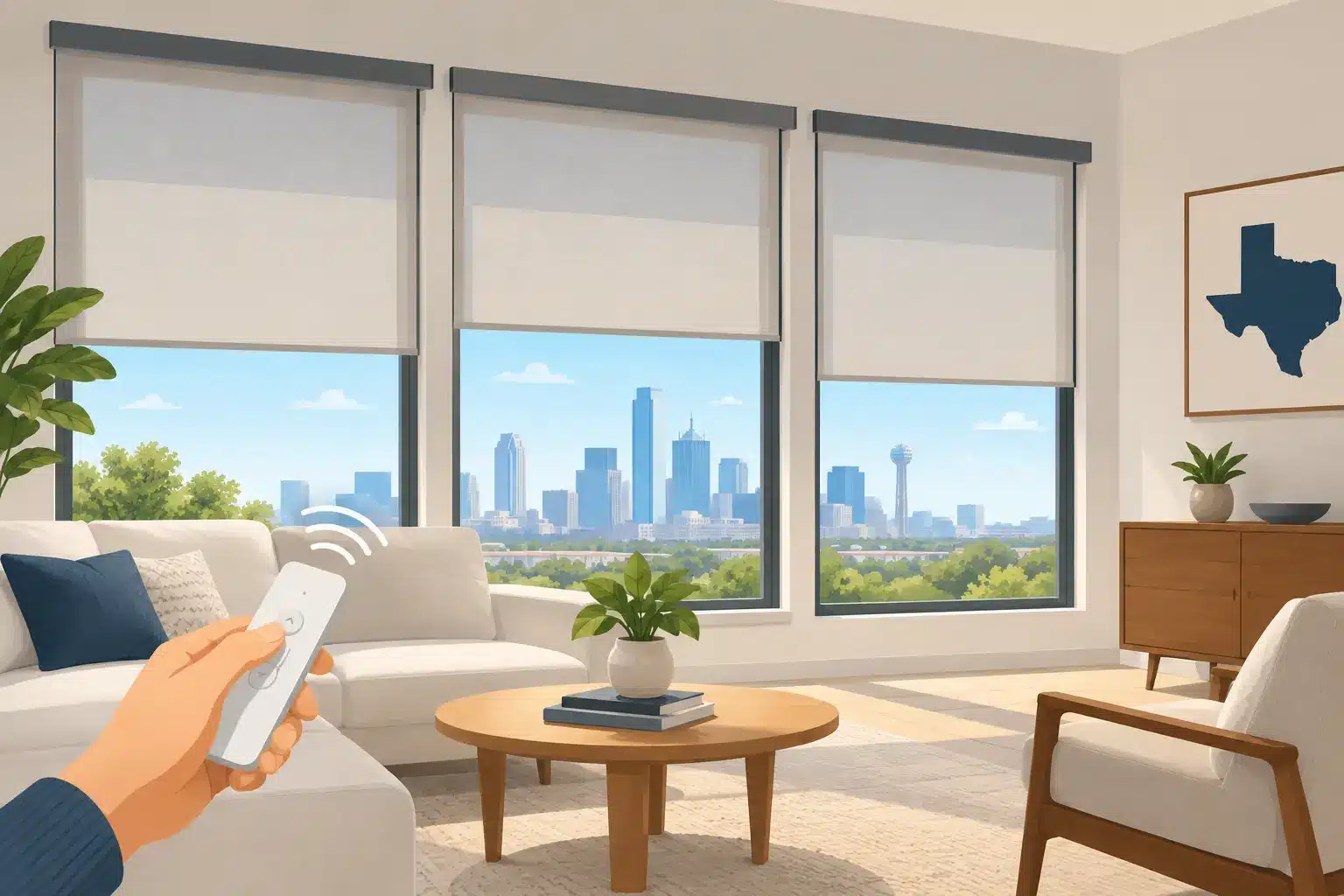
At their simplest, motorized shades raise and lower with a remote, wall control, app, voice command, or scheduled automation. Instead of pulling a cord or reaching behind furniture, you choose the control method that feels most natural for your home. Some homeowners prefer a handheld remote by the sofa. Others want shades to lower automatically as the afternoon sun reaches a west-facing room.
Convenience is the immediate benefit, especially for large windows, hard-to-reach openings, or shades installed behind a bathtub, over a stair landing, or above kitchen cabinetry. But the value goes beyond convenience. Automation lets you use your window coverings more consistently, which is where privacy, light control, and comfort improvements begin to add up.
For example, a solar shade can be programmed to lower during the brightest part of the day while preserving an outward view. In a primary bedroom, room-darkening shades can close on a bedtime schedule and open gently in the morning. A family room with layered treatments may use motorized shades for the practical work of sun control while stationary drapery panels add softness and color.
The Best Rooms for Motorized Window Shades
Nearly any room can benefit, but some spaces make the investment especially worthwhile. Living rooms with large glass doors or expansive windows are a natural fit. These openings bring in beautiful daylight, yet they can also create screen glare, heat buildup, and a lack of privacy after dark. Motorized shades make it easy to respond without interrupting the room.
Bedrooms are another popular choice. Cordless motorization creates a cleaner look and removes dangling lift cords, an appealing consideration for families with young children and pets. It also makes early mornings more pleasant when shades can be set to rise at a preferred time rather than being opened abruptly.
Home offices benefit from more controlled daylight. If video calls, computer screens, or afternoon glare make a workspace difficult to use, scheduled shades can help maintain a comfortable environment without turning the room into a cave. For media rooms, room-darkening or blackout fabrics paired with motorization offer easy control when it is time to watch a movie.
Outdoor living areas deserve consideration, too. Motorized exterior shades can help reduce glare and UV exposure on covered patios while making the space more usable through warm, sunny months. The right outdoor product must be specified for the opening, exposure, wind conditions, and intended use. An experienced consultation matters here because an outdoor screen that looks great on a sample can perform very differently depending on the patio’s orientation and structure.
Choosing the Right Shade Style and Fabric
Motorization is the operating system, not the shade itself. The fabric, opacity, and product style still determine how the window treatment looks and performs.
Solar shades are often a strong choice for view-facing rooms. They filter bright sunlight and reduce glare while maintaining varying degrees of visibility to the outdoors. Openness matters: a more open weave generally preserves more of the view, while a tighter weave offers greater privacy and light control. At night, however, solar shades alone may not provide the privacy some homeowners expect when interior lights are on. Layering them with drapery or choosing a different shade style may be the better solution.
Roller shades offer a streamlined profile with broad fabric options, from light-filtering materials to room-darkening choices. They work beautifully in contemporary spaces, but their clean look can also complement transitional and traditional interiors when the fabric and hardware are selected carefully.
Roman shades bring more texture and softness to a room. Their tailored folds can complement upholstered furnishings, wallpaper, or a more decorative design plan. Woven wood shades add natural character and warmth, though they may require a separate liner when stronger privacy or light blocking is needed.
Cellular shades are worth discussing for rooms where insulation is a priority. Their honeycomb construction can help reduce heat transfer at the window, which may be particularly welcome in sunny Texas exposures. No window treatment eliminates all solar heat gain, and results depend on the glass, window direction, fit, and fabric selection. Still, a properly chosen cellular shade can be a practical part of a more comfortable home.
Smart Controls Should Fit Your Routine
A motorized system does not need to be complicated to be useful. Battery-powered shades are popular because they avoid visible wires and can be an excellent option for many existing homes. Rechargeable battery solutions reduce the need for frequent battery replacement, while hardwired motorization can be ideal during new construction, major renovations, or projects where power is readily available at each window.
The best power source depends on window access, the number of shades, construction conditions, and how often the shades will operate. A single hard-to-reach shade may be well served by battery power. A whole-home project with many automated openings may justify planning for hardwired power. Solar charging options can also be appropriate in select locations, but they depend on adequate light exposure.
Controls can be as simple or as integrated as you prefer. Remote controls are intuitive and reliable. Wall-mounted controls feel familiar to guests and family members. App control is helpful when you are away from home, and smart-home integration can coordinate shades with lighting, temperature, or voice assistants. The most satisfying setup is usually the one that makes daily use easier, not the one with the longest feature list.
Schedules are where automation becomes especially practical. You might lower shades in a sunny breakfast room before the strongest glare arrives, close bedroom shades at night, or open them while away to give the home a lived-in appearance. Grouping shades by room also avoids the need to operate every window individually.
Why Custom Measurement and Installation Matter
Motorized shades are precision products. A small measuring error can create light gaps, interfere with trim, affect alignment, or prevent a shade from operating as intended. This is particularly true for inside-mounted shades, large openings, bay windows, French doors, and windows with handles or deep moldings.
Professional planning also helps resolve the details homeowners may not see at first. Where will the motor sit? Will the shade clear the window crank? Is there enough mounting surface? Should a roller shade be standard roll or reverse roll for the desired appearance and clearance? Can several shades be grouped to operate together? These decisions affect both performance and the finished look.
At Made in the Shade Woodlands, a free in-home consultation brings product samples and practical guidance directly to your space. Seeing fabrics against your actual wall colors, flooring, sunlight, and furnishings makes a meaningful difference. Precise measurement and professional installation then help ensure the shades look intentional and operate reliably from the start.
A Few Trade-Offs to Consider
Motorization adds cost compared with a manually operated shade, so it is helpful to prioritize the windows where it will make the greatest impact. Hard-to-reach windows, large openings, bedrooms, media rooms, and rooms with intense sun are often the best places to begin. You do not have to motorize every shade in the house for the project to feel transformative.
Motorized shades also require occasional attention. Batteries need charging or replacement depending on the system, and smart-home connections may need updates over time. Quality products, professional installation, and manufacturer warranty coverage can provide confidence, but no technology is completely maintenance-free.
Finally, remember that one shade rarely solves every design need. A fabric that preserves a beautiful view may not deliver complete nighttime privacy. A blackout shade may offer excellent darkness but a more minimal look than a decorative Roman shade. A thoughtful design plan balances the priorities for each room rather than forcing the same solution throughout the home.
The best motorized window shades should feel almost invisible in your routine: they respond when the sun gets harsh, protect privacy when evening arrives, and let your home’s windows remain an asset instead of a daily adjustment. A well-planned consultation is the easiest place to start, because the best choice becomes much clearer when you can see it working for your own rooms.

