
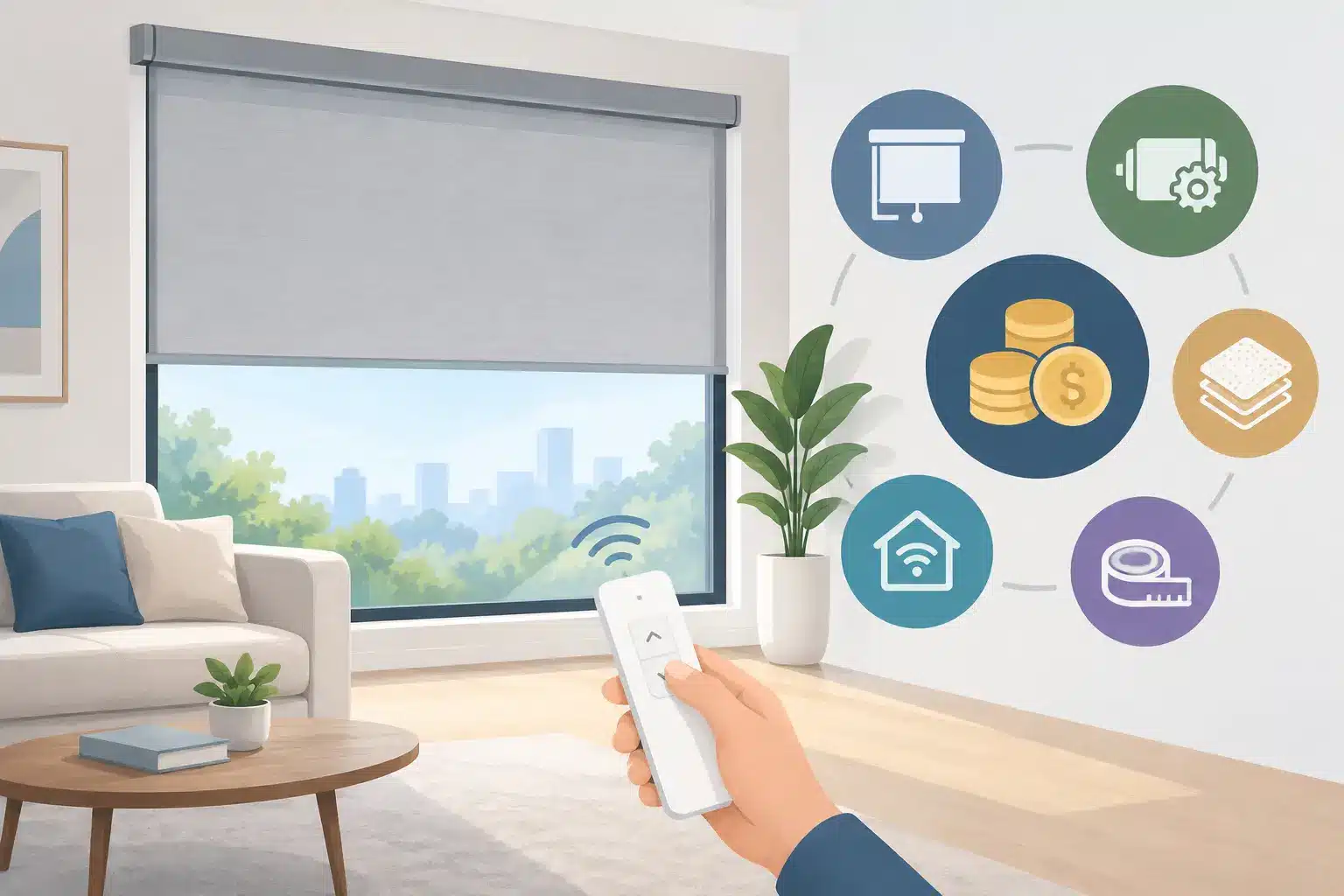
A motorized shade can make a tall wall of windows feel effortless at sunrise, keep afternoon glare off the television, and give a busy family one less daily task. But motorized shade pricing is rarely a one-number answer. These are custom window treatments, and the final investment reflects the window, the material, the control method, and the level of professional service behind it.
For homeowners in The Woodlands and throughout Montgomery County, the most useful question is not simply, “What does motorization cost?” It is, “What will this solution do for this room?” A thoughtfully specified shade can protect furnishings from harsh Texas sun, improve privacy, support energy efficiency, and look like it was always meant to be part of the home.
What Is Included in Motorized Shade Pricing?
Motorized shades generally cost more than comparable manual shades because they include a motor, power source, controls, and the expertise to specify and install them correctly. Depending on the shade style, window dimensions, fabric, and smart-home features, a custom motorized shade may begin in the several-hundred-dollar range per window and rise well beyond that for large, specialty, or highly tailored applications.
That range is broad because a small bedroom window with a rechargeable battery motor is a very different project from a two-story living-room opening with hardwired shades, premium solar fabric, and whole-home control. Looking at an estimate as a complete system, rather than a product line item, makes the pricing easier to understand.
A custom quote typically accounts for the shade itself, the motorization components, selected controls, precise measuring, installation, and warranty coverage. For hardwired projects, electrical planning may be a separate consideration. Your consultant can help identify that early, before drywall is closed or a renovation reaches its final stages.
The Factors That Affect Motorized Shade Cost
Window size and shape
Larger shades require more material and stronger components, especially when the window is wide or tall. Oversized openings may need specialized tubes, brackets, or paired shades to maintain a clean appearance and reliable operation. Arched, angled, unusually deep, or hard-to-reach windows can also require more planning than standard rectangular openings.
A row of average-size windows may have a lower per-window cost than one dramatic expanse of glass, even if the overall square footage is similar. The mechanics matter as much as the fabric.
Shade style and material
Roller shades, solar shades, cellular shades, Roman shades, woven woods, and layered shades each create a different look and perform differently. A light-filtering roller shade with a straightforward fabric will typically price differently than a lined Roman shade with a decorative textile and tailored folds.
Fabric selection is a meaningful part of the investment. Solar fabrics are popular in sun-filled Texas rooms because they help reduce glare and UV exposure while preserving a view. Blackout materials are often preferred for bedrooms, media rooms, and nurseries. Cellular shades can add insulation at the window, while woven materials bring texture and warmth to a space.
The right choice depends on how you use the room. A beautiful open-weave fabric may be ideal for a breakfast room but provide less nighttime privacy than a more opaque option. During an in-home consultation, seeing samples against your actual walls, flooring, and daylight is far more revealing than choosing from a screen.
Battery, plug-in, or hardwired power
The power source has a direct effect on motorized shade pricing and long-term convenience. Rechargeable battery-powered shades are often a practical choice for existing homes because they avoid opening walls or adding electrical wiring. They are especially appealing for individual windows and smaller projects.
Plug-in power can work well when an outlet is discreetly located nearby. Hardwired motorization is often the cleanest option for new construction, major remodels, or large projects with many shades. It may cost more upfront because of electrical coordination, but it eliminates battery charging and can be an excellent fit for homeowners planning a connected home from the start.
There is no universally best power option. The best one is the one that fits the window location, project timing, desired controls, and how much maintenance you want over time.
Control options and smart-home integration
A basic handheld remote is a simple, effective way to operate motorized shades. Wall controls, multi-channel remotes, timers, voice control, and app-based operation add convenience and can increase the investment.
Grouping shades is especially useful in rooms with several windows. One command can lower every shade in a living room for movie night or raise them together in the morning. Automated schedules can also help manage strong western exposure, which is a practical benefit in many local homes.
If you already use a smart-home platform, compatibility should be discussed before a product is selected. Not every motor and control system works the same way, and a good plan keeps the experience easy rather than adding another app or remote to manage.
Installation conditions
Professional installation is not an afterthought with motorized window treatments. Precise measurements affect light gaps, fabric alignment, bracket placement, and how smoothly the shade operates. A beautiful shade can look less polished if it is installed a fraction of an inch off level or does not account for window trim, handles, or molding.
Difficult access, very high windows, concrete or steel framing, and specialty architectural details can all influence installation requirements. This is why an in-home assessment is valuable. It replaces assumptions with a clear plan before your order is placed.
Where Motorization Delivers the Most Value
Motorization is not necessary for every window, and a mixed approach often makes sense. Homeowners may choose motorized shades for the spaces where convenience, safety, or light control matter most, then select manual treatments in less frequently used rooms.
High windows are an obvious candidate because they can be difficult or unsafe to reach. So are wide banks of windows, sliding doors, and rooms that receive intense afternoon sun. Bedrooms benefit from scheduled blackout shades, while living areas often benefit from automated solar shades that preserve the view without allowing glare to take over the room.
Motorization can also be a thoughtful child-safe choice. Cordless operation removes dangling lift cords, creating a cleaner look and reducing a common concern in homes with young children and pets. For outdoor living spaces, motorized exterior shades can make a patio more comfortable by reducing sun and glare while maintaining the open feel that makes the space enjoyable.
How to Plan a Realistic Budget
Start by prioritizing the windows that will make the biggest difference in your daily routine. Consider which rooms are hardest to manage, which receive the strongest sun, and where privacy changes throughout the day. Then decide whether you want simple individual operation or coordinated control across several rooms.
It also helps to think beyond the purchase day. A lower initial cost may be the right choice for one room, while hardwired power or smart-home integration may be worth the added expense in a long-term renovation. Quality fabrics, dependable motors, professional installation, and manufacturer warranties all contribute to the value you live with after the shades are installed.
At Made in the Shade Woodlands, we bring the showroom to you, so you can compare materials and control options in the rooms where they will actually be used. We measure carefully, explain the trade-offs in plain language, and help you create a plan that fits your home instead of forcing your home to fit a standard package.
The clearest way to evaluate motorized shades is to see the possibilities at your own windows. With the right combination of fabric, power, and controls, the finished result should feel less like a gadget and more like a natural part of how your home works.

