
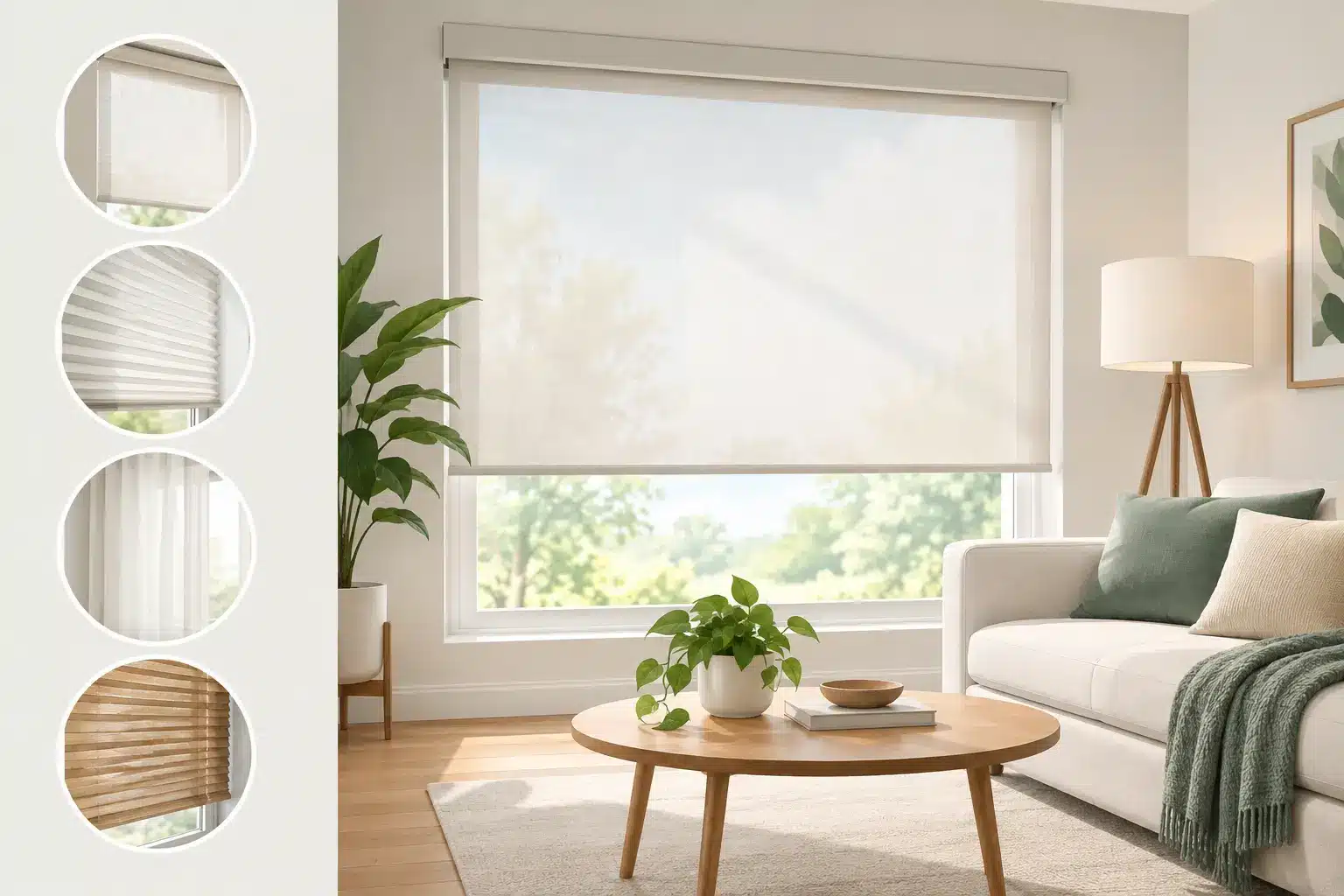
Sunlight is one of the reasons homes in The Woodlands feel so inviting, but the same bright Texas light can create glare, fade furnishings, and make a room feel exposed. Knowing how to select light-filtering shades starts with a simple goal: soften the sun without closing off the room you love.
Light-filtering shades are a natural choice when you want daylight, privacy, and a finished look to work together. They diffuse incoming light rather than blocking it completely, creating a gentler glow across the room. The right option depends on how you use the space, which direction the windows face, and how much privacy you need after dark.
Start With the Light You Want to Keep
The term light-filtering covers a range of fabrics and materials. Some shades softly brighten a room while obscuring most outside detail. Others are more open, preserving a clearer view and admitting more daylight. Neither is automatically better. The right level of filtering is the one that makes your room more comfortable at the times you use it most.
In a north-facing sitting room, a lighter fabric may provide all the diffusion you need. In a west-facing family room, where late-afternoon sun can be intense, a denser material or a dual-shade solution may make more sense. Consider the view, too. If your windows look onto trees or a landscaped yard, you may want a fabric that maintains some visual connection to the outdoors. If they face a nearby home or street, privacy may take priority.
A useful test is to notice what happens in the room at three points: morning, midafternoon, and evening. The sun’s angle changes dramatically throughout the day, and the shade that seems perfect at noon may not solve glare at 5 p.m.
How to Select Light-Filtering Shades by Room
A whole-home window treatment plan does not have to use one shade fabric everywhere. Coordinating colors and styles can create a cohesive look while allowing each room to perform differently.
Living Rooms and Open-Concept Spaces
Light-filtering roller shades, solar shades, woven wood shades, and sheer shades can all suit shared living areas. These spaces often benefit from softened daylight because it keeps the room open and welcoming. If television glare is an issue, ask for materials with stronger light control or consider layering shades with drapery panels for added flexibility and visual warmth.
For large windows, consistent alignment and a clean installation matter as much as fabric selection. Custom shades can be sized and mounted to fit the architecture rather than looking like an afterthought.
Bedrooms and Nurseries
Light-filtering shades work beautifully in bedrooms where a soft morning glow is welcome. However, they are not the same as blackout shades. If a child naps during the day, a family member works overnight, or early sun interrupts sleep, consider a layered approach. A room-darkening liner, blackout drapery, or a dual shade with separate light-filtering and blackout fabrics gives you more control.
Privacy deserves special attention here. A shade that looks opaque during the day may reveal silhouettes at night when interior lights are on. Your consultant can demonstrate this difference with actual samples, which is far more reliable than choosing from a small online swatch.
Kitchens, Bathrooms, and Home Offices
In kitchens, light-filtering shades should be easy to maintain and appropriate for humidity, splashes, and frequent use. A smooth roller shade can offer a streamlined, low-fuss solution near a sink or breakfast area. In bathrooms, privacy and moisture resistance often guide the decision, especially on windows near a tub or shower.
For home offices, the primary concern is usually screen glare. Solar shades can reduce glare and UV exposure while retaining an outward view, depending on the openness of the fabric. If video calls are part of your workday, think about where light falls on your face and monitor before selecting a shade.
Compare Openness, Color, and Fabric Weight
Solar shade fabrics are commonly described by openness factor, which refers to how much light and view can pass through the weave. A lower openness factor generally provides more glare reduction and daytime privacy, while a higher openness factor preserves more of the view. It is a practical specification, but it should not be the only factor in your decision.
Color affects performance as well as style. Lighter shades tend to reflect more heat and can make a room feel airy. Darker solar fabrics may offer a sharper view to the outdoors during the day, but they can absorb more heat. In a sunny Montgomery County home, the balance between view, glare control, and heat management is worth seeing in person.
Woven materials add texture and dimension, but their natural variations can allow more light through than a tightly woven roller fabric. They are especially appealing in rooms that need softness and character, though they may require a liner when privacy or stronger filtering is needed. A beautiful fabric is only successful when it also meets the room’s everyday needs.
Think About Privacy at Night
Daytime privacy can be misleading. When it is brighter outside than inside, many light-filtering shades limit visibility into the home quite well. At night, the relationship reverses. Interior lighting can make a window more visible from outside, particularly with open-weave fabrics and shades that lack a liner.
For street-facing rooms, bedrooms, and bathrooms, ask to see each option under backlit conditions. You may decide that a top-down/bottom-up shade is useful for maintaining privacy while bringing daylight in from above. Or, you may prefer a layered treatment that offers light filtering during the day and more coverage after sunset.
Do Not Overlook Heat, UV Protection, and Orientation
Light-filtering shades can help protect flooring, artwork, upholstery, and wood finishes from harsh UV rays. They can also make sun-facing rooms more comfortable by reducing solar heat gain. Still, the degree of protection varies by fabric, color, openness, and window orientation.
East and west windows typically require the most careful planning because low-angle sun can be difficult to manage. South-facing windows may receive broad, direct exposure for much of the day. A shade that performs well on one side of the house may not be the best match for another.
For patio doors, sunrooms, and exterior living areas, the same principle applies. Outdoor solar shades can help reduce glare and heat while preserving a sense of openness. In these spaces, weather exposure, wind, insects, and the size of the opening all influence the product choice.
Choose an Operating Style That Fits Daily Life
A shade should be easy enough to use that everyone in the household will actually use it. Cordless operation offers a clean appearance and supports a safer environment for children and pets. Motorized shades are especially convenient for tall windows, wide openings, or hard-to-reach areas above stairs and behind furniture.
Smart-home compatible motorization also makes it possible to schedule shades around the strongest sun or control several shades together. This is not only about convenience. In a room with repeated afternoon glare, automated adjustments can protect furnishings and keep the space comfortable without requiring daily attention.
The hardware and mounting style deserve consideration, too. An inside mount creates a tailored, built-in appearance when the window frame has enough depth and is reasonably square. An outside mount can cover more of the window opening, improve light control, and solve challenges with shallow frames. Precise measuring makes the difference between a shade that simply covers a window and one that looks intentional.
See Samples Where They Will Actually Live
Window treatment decisions are highly visual, and store lighting cannot duplicate the way a fabric will behave in your home. Viewing samples near your own windows lets you compare color against wall paint, flooring, cabinetry, and furnishings. It also reveals how the material responds to the specific light outside your home.
That is why an in-home consultation is so valuable. Made in the Shade Woodlands brings curated options to you, discusses privacy and light-control goals, takes detailed measurements, and helps coordinate the finished design. Professional installation then ensures the shades operate properly and align cleanly across the room.
Before making a final choice, stand in the room at the time of day that gives you the most trouble. The best light-filtering shade is not the one that looks best on a display rack. It is the one that lets your home feel bright, comfortable, private, and distinctly yours.

