
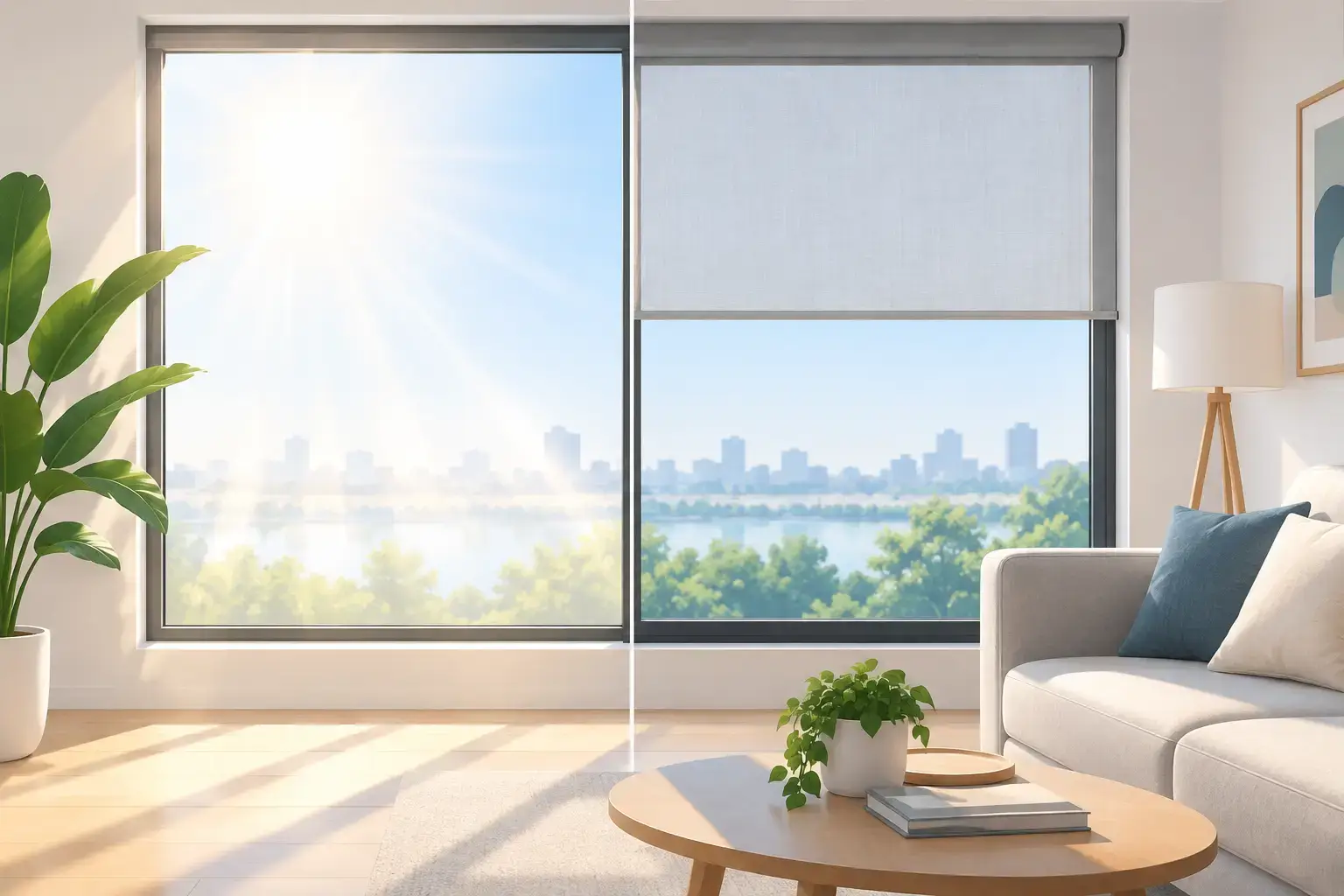
A bright Woodlands living room can feel welcoming at 10 a.m. and nearly unlivable by 4 p.m. when the sun hits the television, laptop screen, or polished kitchen island just right. Knowing how to prevent window glare is not about darkening every room. It is about softening direct sun while keeping the natural light, views, and open feeling you love.
Glare is especially common in Montgomery County homes with expansive windows, tall ceilings, west-facing great rooms, and outdoor spaces designed to bring the landscape closer. The right window treatment can make those features more comfortable without hiding them.
Why Window Glare Is More Than a Minor Annoyance
Glare happens when intense sunlight contrasts sharply with the surrounding room. Your eyes work harder to adjust, screens become difficult to see, and a peaceful room can suddenly feel harsh. It may show up as a white reflection across the TV, a hot stripe of light on the dining table, or a blinding angle on a home-office monitor.
Direct sun also carries UV exposure and heat. Over time, that can fade hardwood floors, upholstery, artwork, and area rugs. In Texas, reducing glare often goes hand in hand with making a room more comfortable during the hottest part of the day.
The best solution depends on where the glare occurs, when it occurs, and what you need the room to do. A media room has different light-control needs than a breakfast nook. A patio facing the afternoon sun needs a different approach than an east-facing bedroom.
Start With the Direction and Timing of the Sun
Before selecting a shade or blind, pay attention to the pattern of sunlight for several days. Notice which windows create a problem and at what time. West-facing windows tend to cause the strongest late-afternoon glare and heat, while east-facing windows may make morning routines uncomfortable. South-facing windows often receive steady light throughout the day, and north-facing windows usually receive softer, more consistent daylight.
Also consider the glare source. Television and computer screens need more precise control than a hallway window. A shiny countertop, glass tabletop, or light-colored floor may reflect sunlight into your eyes even when the sun itself is not in your direct line of sight.
This simple observation makes a major difference. It allows your window-treatment plan to be tailored to real life rather than based on a one-size-fits-all answer.
Choose Treatments That Filter Light, Not Just Block It
For many living areas, the goal is not blackout darkness. It is diffused daylight. These treatments help reduce harsh sun while maintaining a bright, inviting room.
Solar shades preserve views while cutting glare
Solar shades are a popular choice for rooms with large windows, scenic views, and frequent screen use. Their specialized fabric filters sunlight, reduces glare, and helps block UV rays while still allowing a degree of outward visibility.
The openness factor matters. A more open weave provides a clearer view and more daylight, but it also allows more light through. A tighter weave offers stronger glare control and privacy, though the view becomes more subdued. This is one of the most useful decisions to make with samples held directly at your own windows.
Solar shades are particularly effective in great rooms, home offices, kitchens, and patios. They offer a clean, contemporary appearance and can be raised when you want a completely unobstructed view.
Sheer shades soften intense sunlight
Sheer shades pair soft fabric vanes with translucent panels, creating an elegant way to diffuse bright sunlight. With the vanes open, you can enjoy softened daylight and a view outside. Adjusting the vanes provides more glare control without the hard, closed-off look of traditional blinds.
They are a lovely fit for formal living rooms, dining rooms, and bedrooms where you want light to feel gentle rather than severe. Sheer shades are not typically the best choice for complete room darkening, but they are excellent for taking the edge off strong sun.
Cellular shades add insulation and flexible privacy
Cellular shades diffuse light beautifully, and their honeycomb-shaped construction can help insulate windows. That is a valuable benefit during a Texas summer, when sun exposure can make certain rooms noticeably warmer.
Top-down/bottom-up operation is especially helpful when glare enters at eye level. You can lower the top portion to block the sun while leaving the bottom of the window covered for privacy. The result is natural light near the ceiling without a direct beam across the room.
Use Adjustable Treatments for Changing Light
Some rooms need more control because sunlight changes quickly throughout the day. Adjustable treatments allow you to redirect light instead of simply raising or lowering a shade.
Plantation shutters offer precise control and lasting style
Interior shutters are a strong option for homeowners who want architectural character along with practical light management. Tilting the louvers upward can direct light toward the ceiling instead of across a screen or seating area. Closing them farther provides stronger glare reduction and privacy.
Shutters are durable, easy to clean, and well suited to sunny rooms. Their trade-off is that they frame the window more permanently than a retractable shade. For many homeowners, that built-in, polished look is exactly the appeal.
Horizontal blinds provide targeted light redirection
Wood blinds, faux wood blinds, and aluminum blinds allow you to tilt slats based on the sun’s angle. They can be an effective answer for windows that need frequent, practical adjustment, including offices, utility spaces, and casual living areas.
Faux wood blinds are especially useful in spaces with humidity, such as bathrooms or kitchens. For a more refined result, consider the slat size, finish, and how the blind will stack when raised. Precise measuring is essential so the treatment operates smoothly and looks proportional to the window.
Add Room-Darkening Where It Truly Helps
There are moments when light filtering is not enough. Bedrooms, media rooms, nurseries, and spaces used for daytime movies may benefit from room-darkening or blackout shades.
A blackout fabric blocks light through the material, but light can still enter around the edges unless the installation is designed for maximum coverage. Outside-mounted shades, side channels, or layered drapery can reduce those light gaps. If a room needs both daytime glare control and nighttime darkness, pairing a solar shade or sheer shade with drapery can provide the best of both worlds.
Layering also adds visual warmth. A streamlined shade handles daily sun control, while stationary drapery panels soften the room and create a more finished design.
Consider Motorization for Hard-to-Reach or High-Glare Windows
The treatment that works best is the one you will actually use. Motorized shades make it easy to lower glare protection when the afternoon sun moves across the room, then raise it later to restore the view.
This is especially practical for tall windows, large banks of glass, and windows behind furniture. Smart-home-compatible motorization can operate shades by remote, wall control, app, or schedule. You might schedule west-facing shades to lower before the strongest afternoon sun arrives, rather than remembering after the room has already heated up.
Motorization is also a thoughtful child-safe option because it can eliminate dangling cords. It adds convenience, but it is not necessary for every window. In a rarely used guest room, a manual shade may be the more sensible investment. In a busy family room with hard-to-reach windows, the convenience can be worth it every day.
Do Not Forget Outdoor Glare
Window glare is not limited to indoor rooms. On a covered patio or outdoor kitchen, low-angle sun can make it difficult to enjoy dinner, watch a game, or use a laptop outside. Exterior solar shades can cut glare and heat before sunlight reaches the patio, while helping preserve the view and airflow.
The right fabric and openness level depend on whether your priority is sun protection, daytime privacy, insect control, or visibility toward the yard. Outdoor shades should be specified carefully for the opening, exposure, mounting surface, and wind conditions. A properly fitted system looks intentional and performs far better than an off-the-shelf solution.
How to Prevent Window Glare With a Custom Plan
The most successful glare-control projects balance performance with the way a home looks and feels. A treatment that is perfect for a sunny home office may not suit a formal dining room, and a beautiful fabric may not deliver enough screen visibility for a media space.
An in-home consultation takes the guesswork out of those decisions. Seeing materials against your wall colors, furnishings, window direction, and actual daylight is far more useful than choosing from a small swatch under showroom lighting. Accurate measurements and professional installation also help prevent side gaps, uneven operation, and a finish that feels less polished than the rest of your home.
At Made in the Shade Woodlands, we bring curated options to your home so you can compare light filtering, colors, textures, and control styles where they matter most. A thoughtful solution should let you enjoy the sunlight on your terms – comfortable enough for work, relaxing enough for family time, and tailored enough to feel like it has always belonged in the room.

