
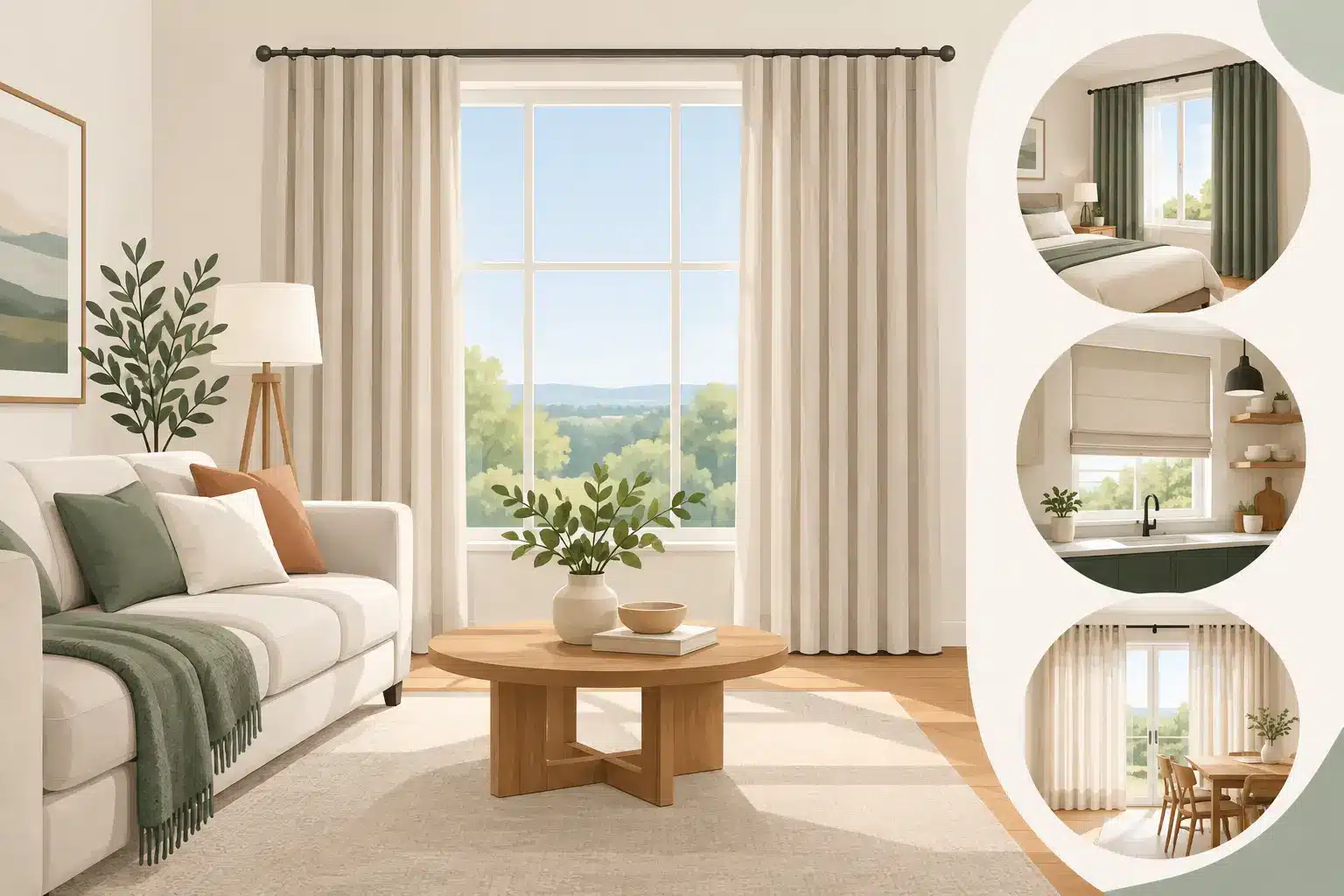
The right custom drapery does more than frame a beautiful view. It can soften the hard surfaces in an open-concept room, filter intense Texas sunlight, create needed privacy after dark, and make a space feel intentionally finished. The difference is in the details: how the fabric hangs, where the rod is placed, whether the panels are lined, and how the treatment works with the rest of the room.
For homeowners in The Woodlands and throughout Montgomery County, drapery is often the finishing layer that brings a renovation, new build, or room refresh together. But it also needs to perform. A sun-facing family room has different needs than a formal dining room, and a primary bedroom deserves a different approach than a set of patio doors.
Why Custom Drapery Changes the Room
Ready-made curtain panels can be useful for a temporary solution, but they rarely account for the actual proportions of the window, ceiling height, furniture placement, or light conditions in your home. Custom-made panels are specified for the space, not pulled from a standard shelf size.
That tailored fit creates a more polished visual effect. Panels can be made wide enough to look full when closed and stack back neatly when open. They can be mounted higher and wider than the window itself, which often makes ceilings feel taller and windows appear more generous. The fabric can also be selected to coordinate with wall color, upholstery, rugs, and architectural finishes without trying to force a near-match.
Performance matters just as much. A lining can protect decorative fabrics from sun exposure, add body to the panels, improve privacy, and help moderate light. For bedrooms, media rooms, and spaces with early morning sun, room-darkening or blackout linings can make a meaningful difference. In living areas, a lighter lining or sheer fabric may be the better choice when you want softened daylight without closing off the view.
Start With How You Use the Space
The best drapery decisions begin with the room’s daily routine. Before choosing a color or pattern, consider what needs to happen at that window from morning to night.
In a primary bedroom, privacy and light control may lead the conversation. A layered treatment often works well here: a functional shade provides everyday coverage, while side panels add softness and visual warmth. This approach is especially helpful when blackout performance is important but you still want the room to feel welcoming during the day.
In a living room, custom drapery may be more about atmosphere and glare control. Sheer panels can diffuse bright afternoon light while preserving a sense of openness. Stationary decorative panels can add dimension around a window with another functional treatment beneath them. If the room faces a patio, pool, or wooded view, the goal may be to manage the sun without hiding what makes the space special.
Dining rooms and formal spaces often invite a more decorative approach, but practical details still apply. A lined fabric with a tailored pleat can bring elegance without requiring daily adjustment. In a busy family room, a durable, easy-care fabric may be the wiser investment, particularly near pets, children, or frequently used doors.
Fabric, Color, and Texture Set the Tone
Fabric is where drapery becomes personal. Linen-look materials, woven solids, subtle patterns, velvets, and sheers all create a different mood, even when they share a similar color palette.
For a relaxed, light-filled home, textured neutrals and soft linen blends can add depth without making the window treatment the focal point. If your furnishings are mostly neutral, a small-scale pattern can introduce character while still feeling timeless. Richer fabrics and deeper colors can make a study, dining room, or bedroom feel more grounded and tailored.
Color deserves careful consideration because window treatments interact directly with daylight. A fabric that looks warm and creamy in a sample may read differently in a room with cool northern exposure or strong western sun. Seeing options in your own home is valuable for this reason. You can compare fabrics against your paint, flooring, furniture, and the actual light throughout the day.
Texture often has more impact than homeowners expect. A quiet woven fabric may look simple up close but provide the dimension needed to keep a neutral room from feeling flat. On the other hand, a high-contrast pattern can be beautiful, but it asks to be noticed. It is usually best used when the room has enough visual calm elsewhere to support it.
The Case for Lining
Lining is not merely an add-on. It affects the way panels drape, how much privacy they provide, and how well the decorative fabric stands up to sunlight. Standard lining is suitable for many rooms, while heavier room-darkening and blackout options are more appropriate when light control is a priority.
Blackout does not always mean a room must look dark or heavy. The decorative face fabric can remain light and airy, with the performance layer hidden behind it. The right option depends on whether you need complete darkness, reduced glare, improved privacy, or simply a fuller, more substantial finish.
Hardware and Construction Matter More Than They Seem
Beautiful fabric will not compensate for undersized hardware or a rod installed at the wrong height. Drapery hardware should be selected for both the style of the room and the weight of the treatment. Finials, brackets, rings, and rod finishes can be quiet supporting details or a deliberate design statement.
The heading style also shapes the final look. Pinch pleats offer a classic, structured appearance. Ripplefold panels create clean, even waves and are especially appealing in contemporary rooms or across wide expanses of glass. Grommets and rod pockets can suit certain casual styles, though they may not offer the same tailored operation or fullness as professionally specified pleated options.
Panel width, fullness, and stack-back need to be planned together. If drapery is intended to open and close, the fabric must clear enough glass to preserve the view and daylight. On patio doors or large windows, that calculation can make the difference between a treatment that feels effortless and one that is constantly in the way.
When Layered Window Treatments Make Sense
Custom drapery does not have to do every job on its own. Pairing it with shades, shutters, or blinds often creates the most flexible solution. The under-treatment handles privacy, glare, insulation, and everyday operation, while drapery adds color, softness, and a finished architectural presence.
For example, a woven wood shade can provide filtered daytime light, with lined side panels adding warmth and visual balance. Cellular shades can support energy efficiency on challenging windows, while decorative drapery keeps the room from feeling overly utilitarian. Motorized shades are a smart choice for hard-to-reach windows, tall ceilings, or rooms where you want scheduled light control without adjusting multiple treatments by hand.
Layering is particularly useful in Texas homes, where bright sun and heat can change dramatically through the day. It gives you the freedom to enjoy natural light when you want it and manage it when you do not.
Why Professional Measurement and Installation Are Worth It
Drapery has very little room for measurement errors. A panel that is too short, too narrow, or mounted too low can make an otherwise lovely room feel unfinished. The same is true of hardware that is not anchored properly or panels that do not stack evenly.
A professional in-home consultation simplifies the process. Your consultant can assess ceiling height, trim depth, window operation, obstructions, sun exposure, and the best placement for rods or tracks. They can also bring curated fabric and hardware options to the home, where you can make decisions with real context rather than guessing under showroom lighting.
Precise measurement is especially valuable for angled ceilings, bay windows, wall-to-wall glass, French doors, and large sliding doors. These situations may require specialty hardware, split draw panels, traversing systems, or carefully planned stationary panels. The right solution is rarely one-size-fits-all, and that is exactly where experienced design guidance pays off.
Made in the Shade Woodlands brings the showroom to you, then coordinates the details from selection through professional installation. That means you can focus on the look and function you want while trained local professionals handle the technical work behind it.
A well-chosen drapery treatment should feel natural in the room, not like an afterthought. Give yourself the benefit of seeing fabrics in your own light, asking practical questions, and planning for how you actually live. The result is a window treatment that looks beautiful on day one and continues working hard for your home long after the installation is complete.

