A nursery can be beautifully furnished and still feel unfinished when the window treatment is an afterthought. Morning sun lands directly on the crib, nap time is too bright, or a dangling cord suddenly becomes one more thing to worry about. The best window coverings for nurseries solve those everyday concerns while making the room feel calm, personal, and ready to grow with your child.
For families in The Woodlands and throughout Montgomery County, the right choice often comes down to a thoughtful balance: sleep-friendly light control, child-safe operation, privacy after dark, and a style that still works when the nursery becomes a toddler’s room. Custom window treatments make that balance much easier to achieve because the fit, fabric, lift system, and layering can all be selected for the room itself.
Start With Safety, Not Style
Every nursery window treatment should begin with a cordless design. Corded blinds and shades can create a serious hazard for infants and young children, particularly once a child begins pulling up or reaching from a crib. A cordless lift system, motorized shade, or shutter eliminates exposed operating cords and gives parents a cleaner, more reassuring setup.
Motorization is especially useful in a nursery. With a button, wall control, remote, or compatible smart-home system, you can lower shades before a nap without disturbing a sleeping baby. You can also schedule them to close during the hottest part of a Texas afternoon, then open gradually in the morning for a gentler wake-up routine.
Crib placement matters, too. Keep cribs, changing tables, and climbable furniture away from windows whenever possible. Even a cordless treatment deserves careful planning around a child’s changing mobility. A trained consultant can help assess the entire window area, not just the product you initially had in mind.
The Best Window Coverings for Nurseries by Need
There is no single treatment that is right for every nursery. The best option depends on window direction, room temperature, how easily your child sleeps, and whether you want a tailored or softer decorative look.
Cellular shades for insulation and soft light
Cellular shades are a favorite for nurseries because their honeycomb-shaped construction helps reduce heat gain and heat loss at the glass. That can be especially valuable in sunny Texas bedrooms, where a west-facing window may make the room noticeably warmer late in the day.
They are available in light-filtering and room-darkening fabrics, as well as cordless and motorized options. A light-filtering cellular shade softens harsh daylight while keeping the room bright enough for play. A room-darkening version offers more effective nap-time control. For homeowners who want flexibility, a top-down/bottom-up design can allow daylight in from above while preserving privacy below.
The trade-off is appearance. Cellular shades have a clean, tailored profile, but they do not offer the same texture or decorative presence as drapery. Many families pair them with stationary drapery panels to get both performance and warmth.
Roller shades for clean, reliable blackout control
Custom roller shades are an excellent choice when sleep is the priority. Blackout fabrics can substantially reduce incoming light, helping create a darker environment for daytime naps, early bedtimes, and bright summer mornings. They also sit close to the window, making them a practical solution for smaller rooms or windows near furniture.
Not every dark-colored shade is a blackout shade. The fabric opacity, side gaps, mounting method, and light coming around the edges all affect the result. For the darkest possible nursery, an outside mount with carefully planned overlap is often better than a shade installed inside the window frame. A professional measurement is helpful here because even small gaps can create a bright line of light at sunrise.
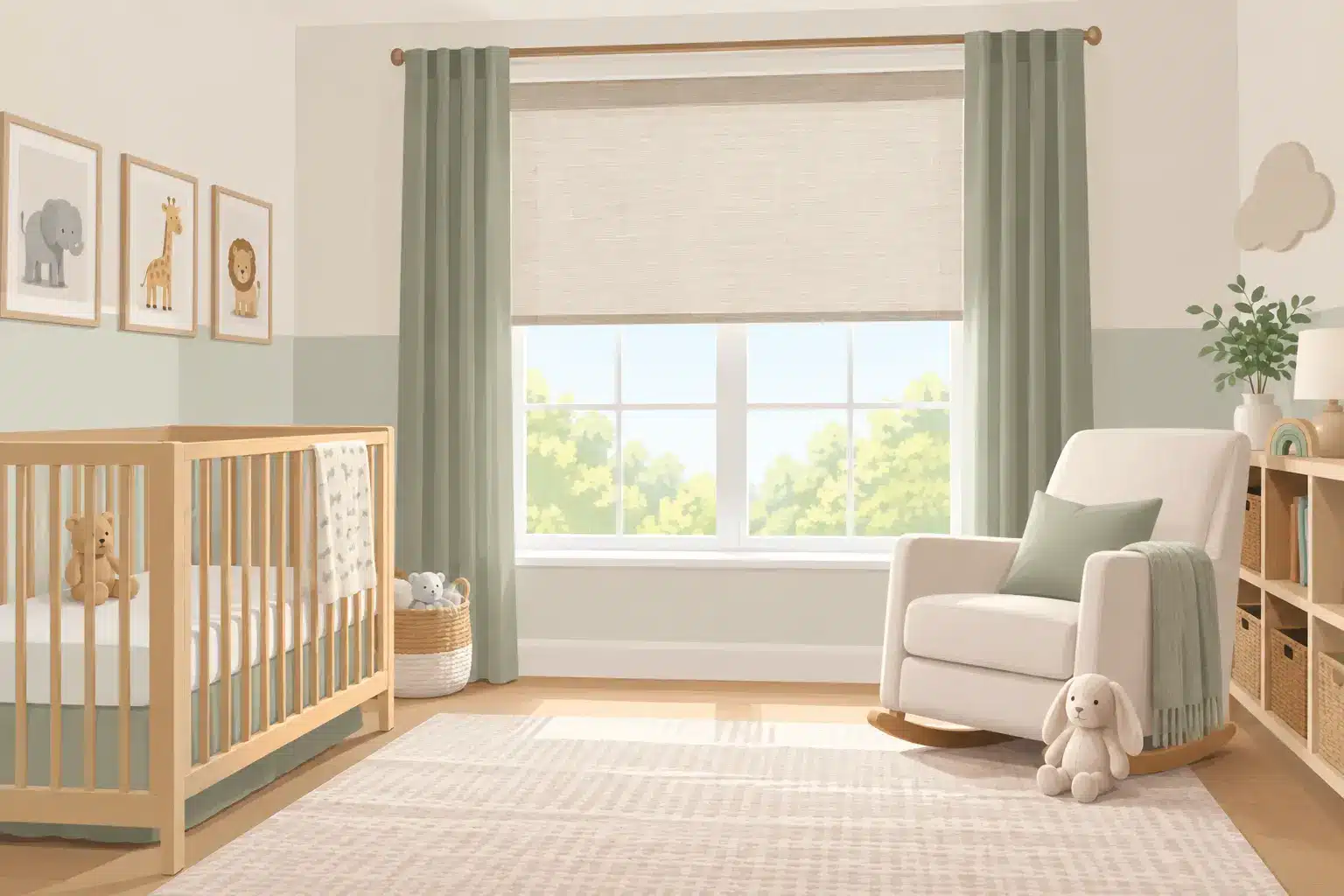
Roller shades come in a broad range of neutrals, subtle patterns, and textured materials. A creamy linen-look fabric can feel soft and polished without competing with wallpaper, painted trim, or a statement rug.
Plantation shutters for lasting structure and privacy
Plantation shutters bring a classic, built-in look to a nursery and remain useful long after the room changes. Their adjustable louvers let you direct daylight upward, protect privacy, and still enjoy some natural light. They are cordless by design, durable, and easy to wipe clean – practical qualities for a child’s room.
Shutters are particularly appealing for homeowners who prefer a more architectural style or want a treatment that complements the rest of the home. They are not typically the best stand-alone option for full blackout conditions, since light can pass between louvers. When darkness is essential, adding room-darkening drapery or a secondary shade can provide better results.
Drapery for softness, layering, and a finished design
Drapery brings the softness that many nursery designs need. It can introduce color, pattern, or a quiet texture while framing the window and making the room feel complete. Room-darkening or blackout-lined drapery panels can improve light control, reduce visual distractions, and create a cozier setting at bedtime.
For safety and function, consider stationary panels paired with a cordless shade, or motorized drapery on a professionally installed track. Long panels should be measured and secured correctly, especially in a room where little hands will eventually explore every corner.
Drapery also lets you choose how decorative the nursery should be. A tailored pinch pleat in a washable-look neutral can transition easily into a big-kid room. A playful print may be perfect for a more themed space, though it is worth considering whether you will still love it in a few years.
Room-Darkening vs. Blackout: Know the Difference
Parents often ask for blackout treatments when they really need room-darkening performance. The two are related, but they are not identical.
Room-darkening fabrics reduce a meaningful amount of light and help make the room comfortable for rest. They work well in nurseries that do not receive intense direct sun, or for children who sleep well without complete darkness. Blackout materials block more light through the fabric itself, but the finished room may still have light around the shade edges, at the top, or between layers.
If your nursery faces east or west, has oversized windows, or sits near a bright streetlight, a layered approach is usually worth considering. A blackout roller or cellular shade behind decorative drapery offers better control than either treatment alone. It also gives you more choices throughout the day: shade down for naps, panels open for play, and both closed for bedtime.
Do Not Overlook Privacy and Heat
A nursery is a private space, particularly after sunset when interior lights make windows more visible from outside. Sheer shades and unlined drapery may look beautiful during the day but can provide limited nighttime privacy. Test the treatment from outdoors or ask your consultant to explain how the fabric performs once the lights are on.
Heat control matters just as much in our area. Direct sun can fade furnishings, warm a room quickly, and make a baby monitor show a temperature higher than the rest of the home. Cellular shades, solar shades, lined drapery, and properly fitted roller shades can all help manage solar heat, although their performance varies by material and installation.
Solar shades are useful when preserving a view is more important than darkening the room, but they are generally better suited to playrooms or older children’s spaces than a nursery requiring strong nap-time darkness. They can still be part of a layered design when paired with room-darkening drapery.
Choose a Style That Can Grow Up
Nursery design changes quickly. The best investment is often a window treatment with a lasting foundation and easily updated accents. Neutral custom shades or white shutters can stay in place for years, while bedding, artwork, drapery panels, and wall color evolve.
Consider the scale of the window, too. Small windows can feel larger when drapery is mounted higher and wider than the frame. A large bank of windows may benefit from separate shades so you can control each section independently. These details are difficult to judge from a product photo, but they make a visible difference once everything is installed.
At Made in the Shade Woodlands, we’ll bring the showroom to you with curated samples, practical recommendations, precise measurements, and professional installation. The goal is not simply to make the nursery look finished. It is to create a room where light, privacy, safety, and comfort quietly work together from the first nap onward.

