
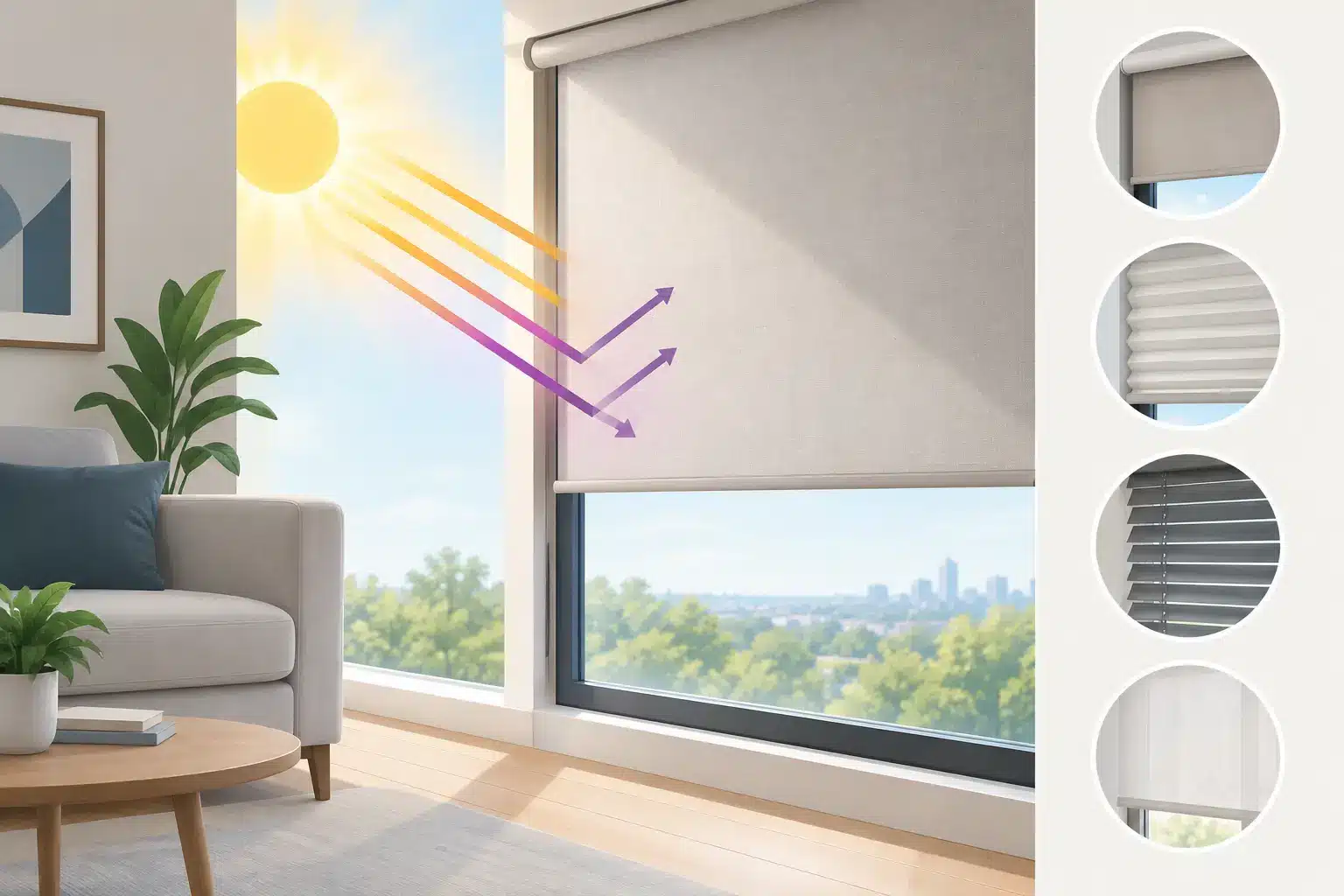
That sunny wall of windows may be one of the reasons you love your home, but Texas sunlight can be tough on interiors. If you are asking what window shades block UV, the best answer is not simply “the darkest ones.” Many shades can reduce ultraviolet exposure while still preserving daylight, a view, or the open feel of the room.
The right choice depends on where the window faces, how much privacy you need, whether you want to see outside, and what you are trying to protect. For a bright family room in The Woodlands, that may mean a solar shade that controls glare without closing off the landscape. For a nursery, bedroom, or sun-facing office, a more opaque shade may be the better fit.
What Window Shades Block UV Most Effectively?
Solar shades, roller shades with opaque materials, cellular shades, Roman shades with liners, and exterior solar shades can all help block UV rays. Their performance varies by fabric, color, openness factor, lining, fit, and installation. A shade can look beautiful and still offer meaningful protection, but it is worth looking beyond appearance when sunlight is a major concern.
Ultraviolet light is one cause of fading in hardwood floors, upholstery, artwork, rugs, and wood furnishings. Heat and visible light contribute to fading as well, which is why a window treatment designed only for privacy may not deliver the results you expect in a sunny room.
Solar Shades: Strong UV Protection With a View
Solar shades are often the first choice for homeowners who want to reduce glare and UV exposure without losing their view. They are made from specially designed screen-like fabrics that filter sunlight before it enters the room. Depending on the material and openness factor, solar shades can block a very high percentage of UV rays.
The openness factor matters. A 1% openness fabric has a tighter weave, providing more privacy, glare control, and UV filtering. A 5% or 10% fabric allows more visibility and natural light through. That does not make higher openness fabrics a poor choice, but they are generally better for rooms where maintaining a view matters more than maximum daytime privacy.
For a living room with large windows facing west, a lower openness solar shade can be especially practical. You can soften the harsh late-afternoon sun, protect furnishings, and still enjoy a connection to the outdoors. Darker fabrics may improve outward visibility during the day, while lighter fabrics can create a brighter, softer interior look.
Roller Shades: Flexible Light Control and Clean Style
Roller shades are one of the most versatile options for UV protection because they are available in solar screen fabrics, light-filtering fabrics, and room-darkening or blackout materials. A solar roller shade is ideal when you want filtered daylight and views. A room-darkening roller shade provides more complete coverage and is a smart choice for bedrooms, media rooms, and windows with intense sun exposure.
For the strongest light control, consider a blackout roller shade with careful installation. Small gaps around the edges are normal with many inside-mounted shades, so a true blackout effect may require an outside mount, side channels, or layered drapery panels. This is where precise measuring and product selection make a visible difference.
Roller shades also work well with motorization. A scheduled shade can lower during the brightest part of the afternoon and raise later, protecting your home without asking you to adjust each window every day.
Cellular Shades: UV Help Plus Insulation
Cellular shades, also called honeycomb shades, are valued for their insulating design. Their air pockets help reduce heat transfer at the window, which can make a noticeable difference in rooms that feel hot or cold near the glass. They also diffuse incoming light and can provide useful UV protection, particularly in more opaque or room-darkening fabrics.
They are an appealing option for bedrooms, upstairs rooms, and areas where energy efficiency is as important as sun control. Top-down/bottom-up cellular shades offer another advantage: you can let daylight enter through the upper portion of the window while keeping lower areas covered for privacy.
The trade-off is that cellular shades do not preserve a clear outdoor view the way solar shades do. They create a soft, filtered glow instead. For many homeowners, that is exactly the look they want.
Roman Shades and Drapery: Protection With a Decorator’s Finish
Roman shades bring texture, color, and a tailored finish to a room. On their own, the level of UV protection depends on the face fabric. Add a quality lining, however, and a Roman shade can offer significantly better light filtering and help protect both the room and the decorative fabric itself.
A privacy lining is useful for softening daylight, while a blackout lining offers stronger light control. Drapery panels can provide similar benefits, especially when they are lined and wide enough to cover the window fully when closed. They are an excellent solution for formal spaces, bedrooms, and rooms where window treatments are an important part of the overall design.
Layering a solar shade with decorative drapery is often one of the most functional and polished combinations. The shade handles daytime glare and UV filtering, while the drapery adds softness, nighttime privacy, and an extra layer of coverage when needed.
Do Light-Filtering Shades Block UV?
Yes, many light-filtering shades block a portion of UV rays, but the percentage varies widely. A sheer or lightly filtered shade can make sunlight feel gentler while still allowing substantial light into the room. That may be enough for a north-facing room or a space without valuable furnishings near the windows.
For a sunny south- or west-facing window, homeowners usually benefit from choosing a product with documented solar performance rather than relying on a fabric’s appearance. The best selection balances the look you want with the amount of protection the room requires.
If fading is already visible on a floor or sofa, it is wise to choose a more protective fabric and use the shades consistently during peak sun hours. No interior window treatment can stop every source of fading, but the right one can substantially reduce daily exposure.
Exterior Shades Stop Sun Before It Reaches the Glass
Exterior solar shades are a standout solution for patios, outdoor kitchens, covered porches, and sun-drenched windows. Because they intercept sunlight outside the home, they can reduce glare and heat before it reaches the glass. This can make an outdoor living space much more comfortable during warm Montgomery County afternoons.
Exterior shades are available in durable, weather-resistant materials and can be manually operated or motorized. Some homeowners choose them primarily for sun and heat control, while others appreciate the added daytime privacy and insect protection available with certain systems.
They are not necessary for every window, but they are particularly valuable on patios that receive strong western exposure. If your outdoor space is beautiful but difficult to use for several hours each day, an exterior shade may offer more impact than an indoor treatment alone.
How to Choose the Right UV-Blocking Shade for Your Home
Start with the window itself. South- and west-facing windows typically receive the most intense direct sun, although large east-facing windows can also create morning glare and heat. Then consider how you use the room. A home office needs screen visibility and glare reduction. A bedroom may need darkness and privacy. A dining room may call for a more decorative treatment that still safeguards the flooring and furniture.
Also think about the view. If your home overlooks a wooded backyard, pool, or garden, solar shades can preserve that connection far better than an opaque treatment. If the window faces a nearby neighbor or street, you may need a more private option or a layered design.
Custom measurements matter here. The way a shade is mounted, how closely it fits the window, and whether it needs to work around trim, doors, or handles all affect both performance and appearance. The most attractive fabric is not the right fabric if it leaves you with glare at the desk or light gaps in the bedroom.
A free in-home consultation lets you see fabrics against your actual walls, furnishings, and natural light instead of trying to make a decision from a small online image. Made in the Shade Woodlands brings samples and practical guidance directly to your home, then handles precise measurements and professional installation.
The best UV-blocking shade is one you will enjoy using every day. Choose a solution that protects the pieces you love, makes your rooms more comfortable, and still lets your home feel like your home.

