
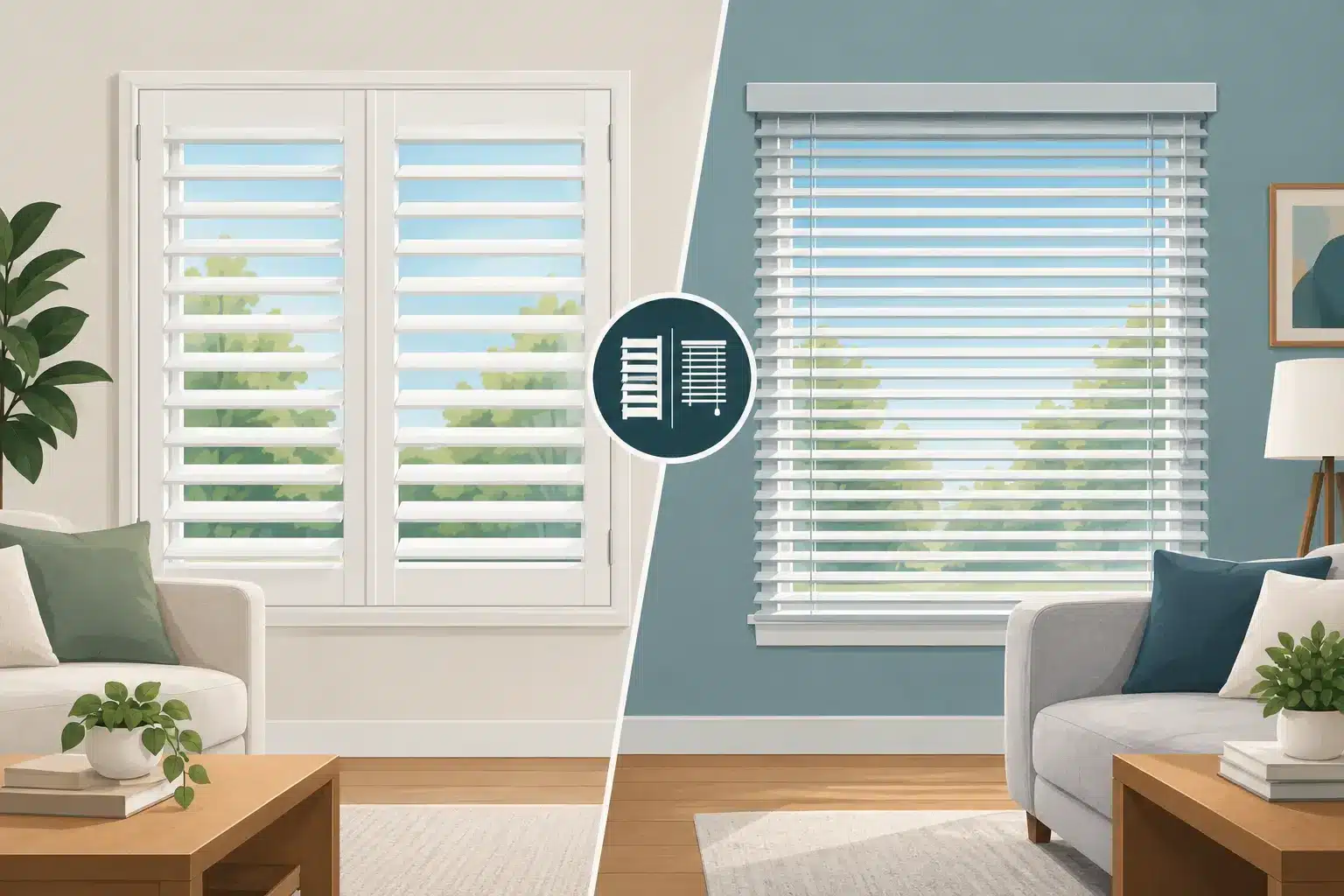
A west-facing living room in The Woodlands can feel completely different at 4 p.m. depending on what is at the window. The right treatment can soften glare, protect furnishings, preserve privacy, and still make the room feel open. When comparing interior shutters versus window blinds, the best choice is rarely just about appearance. It comes down to how you live in the room, the architecture of your home, and the level of long-term performance you expect.
Both options can be custom-made for your windows and professionally installed for a polished result. Yet shutters and blinds solve light control, privacy, insulation, and design challenges in distinctly different ways. Here is how to decide with confidence.
Interior Shutters Versus Window Blinds: The Big Difference
Interior shutters are rigid panels fitted inside the window opening or onto the surrounding frame. Their horizontal louvers tilt to direct light and views, while the panels can often swing open for full access to the glass. They become a permanent-looking architectural feature, much like trim or molding.
Window blinds are a more flexible category. Depending on the material and style, they may use horizontal slats, vertical vanes, or a streamlined operating system that raises and lowers the treatment. They can be made from wood, faux wood, aluminum, or vinyl, among other options. Blinds generally sit within or above the window frame and offer a tailored look without the built-in character of shutters.
That distinction affects everything from the budget to daily use. Shutters tend to be the investment piece. Blinds tend to offer greater material variety and an easier path to outfitting many windows at once.
Style: Built-In Character or a More Flexible Finish?
For homeowners drawn to clean, finished interiors, shutters have a particular appeal. Their defined frames and broad louvers give windows visual weight, even when the louvers are open. They work beautifully in traditional homes, modern farmhouse spaces, transitional interiors, and many contemporary rooms where architectural detail is welcome.
Plantation shutters are especially popular in bright Texas homes because larger louvers can provide a generous view when open while maintaining the crisp lines homeowners love. White composite shutters create a classic, low-maintenance look, while stained wood shutters can bring warmth to studies, dining rooms, and spaces with natural wood finishes.
Blinds can be equally attractive, but their design language is lighter. Wood and faux wood blinds bring texture and horizontal lines without making the window feel as permanent or formal. Aluminum blinds can suit a clean, practical space. The broader range of colors, slat sizes, and finishes gives blinds an advantage when you want to coordinate closely with existing cabinetry, flooring, or furniture.
If your windows are a central design feature and you want a treatment that looks like part of the home itself, shutters often have the edge. If you prefer a simpler profile or need a consistent solution across a larger number of windows, custom blinds may be the better fit.
Light Control and Privacy in Texas Homes
Both shutters and blinds allow you to angle slats for daylight while reducing direct sun. This is useful in rooms where you want privacy without closing off the entire window, such as front-facing living areas, breakfast nooks, and bedrooms.
Shutters offer exceptionally precise light direction because their louvers are supported within a solid frame. You can tilt them upward to bring in daylight while limiting views into the room, or angle them down to reduce glare. Options such as split tilt rods allow the top and bottom sections to operate independently, so you can keep privacy at eye level while admitting light from above.
Blinds also perform well for adjustable light control, particularly wood and faux wood styles with wider slats. However, small gaps around the edges and between slats may allow a bit more light through than shutters. This is not necessarily a drawback. In a casual family room, office, or guest room, that softer, less structured coverage may be exactly what you want.
For bedrooms, consider how much darkness you need. Standard shutters and blinds filter light but are not true blackout treatments. If early morning sun, streetlights, or shift-work schedules are a concern, layering either option with drapery or adding a dedicated blackout shade may be worth discussing.
Durability and Maintenance
Houston-area humidity, active households, and sunny exposures all matter when choosing materials. Not every window treatment belongs in every room.
Composite or poly shutters are an excellent choice for bathrooms, kitchens, laundry rooms, and other humid areas. They resist moisture, will not warp like some natural wood products can, and wipe clean easily. Their sturdy construction also makes them a practical option for busy family spaces.
Wood shutters offer a beautiful finish and can be ideal for large or specialty-shaped windows, but they require the right environment and thoughtful material selection. In high-humidity locations, a composite alternative may deliver the same tailored appearance with less maintenance concern.
Faux wood blinds are a strong everyday performer. They are durable, moisture-resistant, and easy to clean, making them a popular choice for homes with children or pets. Real wood blinds are lighter in weight and provide a richer grain, but they are generally better suited to lower-humidity rooms. Aluminum blinds can be economical and resilient, although they may dent more easily than wood-based options.
For routine care, both shutters and blinds need little more than occasional dusting with a soft cloth or vacuum brush attachment. Shutters have fewer individual pieces to manage, while blinds have cords, ladders, and slats that may require a bit more careful cleaning over time.
Cost and Long-Term Value
Cost is often the clearest dividing line between interior shutters and window blinds. Because shutters are custom-built panels with frames, hinges, louvers, and more substantial installation requirements, they typically cost more upfront than blinds. The exact difference depends on window size, material, panel configuration, specialty shapes, and the number of openings in the project.
That higher initial investment can make sense when shutters are intended to be a lasting feature of the home. They are durable, tailored to the opening, and often viewed as a meaningful upgrade by future buyers. Homeowners frequently choose them for prominent rooms, street-facing windows, primary suites, and spaces where architectural consistency matters most.
Blinds make it easier to achieve custom fit and reliable function within a more moderate budget. They can be a smart choice for secondary bedrooms, offices, rental properties, or whole-home projects where coverage for many windows is the priority. Choosing blinds does not mean settling for off-the-shelf quality. Professionally measured, custom blinds can look refined, operate smoothly, and fit windows far better than a retail ready-made option.
A mixed approach is often the most practical answer. You might select shutters for the front of the home and high-visibility living areas, then use coordinating faux wood blinds in bedrooms or less formal spaces. The result feels cohesive while keeping the investment focused where it matters most.
Operation, Safety, and Smart-Home Options
Shutters are naturally cordless. You simply tilt the louvers by hand and open the panels when desired. That clean operation is appealing for homes with young children and pets, as well as homeowners who want fewer visible components at the window.
Blinds are available with child-safe cordless lift systems, wand controls, and motorized options. Motorization can be especially useful for hard-to-reach windows, tall ceilings, or rooms where you want scheduled privacy and light control. Some systems can be managed by remote, wall control, app, or compatible smart-home platforms.
The best operating method depends on the window and your routines. A consultant should consider furniture placement, window height, access, and whether you want daily adjustments or a set-it-and-forget-it solution. A treatment that looks beautiful but is inconvenient to operate will not deliver its full value.
Getting the Fit Right Matters as Much as the Product
Shutters and blinds both benefit from precise measuring, but shutters leave very little room for error. Window openings are not always square, trim can affect mounting choices, and handles or divided panes may change how a treatment should be specified. Professional measurement helps ensure smooth operation, balanced proportions, and an installation that looks intentional from every angle.
At Made in the Shade Woodlands, a free in-home consultation lets you compare materials and finishes where they will actually be used. Seeing samples beside your wall color, flooring, and natural light is far more useful than trying to make a final decision under showroom lighting. We will also help you weigh privacy needs, sun exposure, moisture levels, and smart-home preferences before your custom order is placed.
Choose shutters when you want enduring architectural style, sturdy construction, and highly controlled light. Choose blinds when you value material flexibility, a lighter visual profile, or a more budget-conscious custom solution. The most satisfying choice is the one that makes your rooms more comfortable to use every day and feels right each time you walk through the door.

