
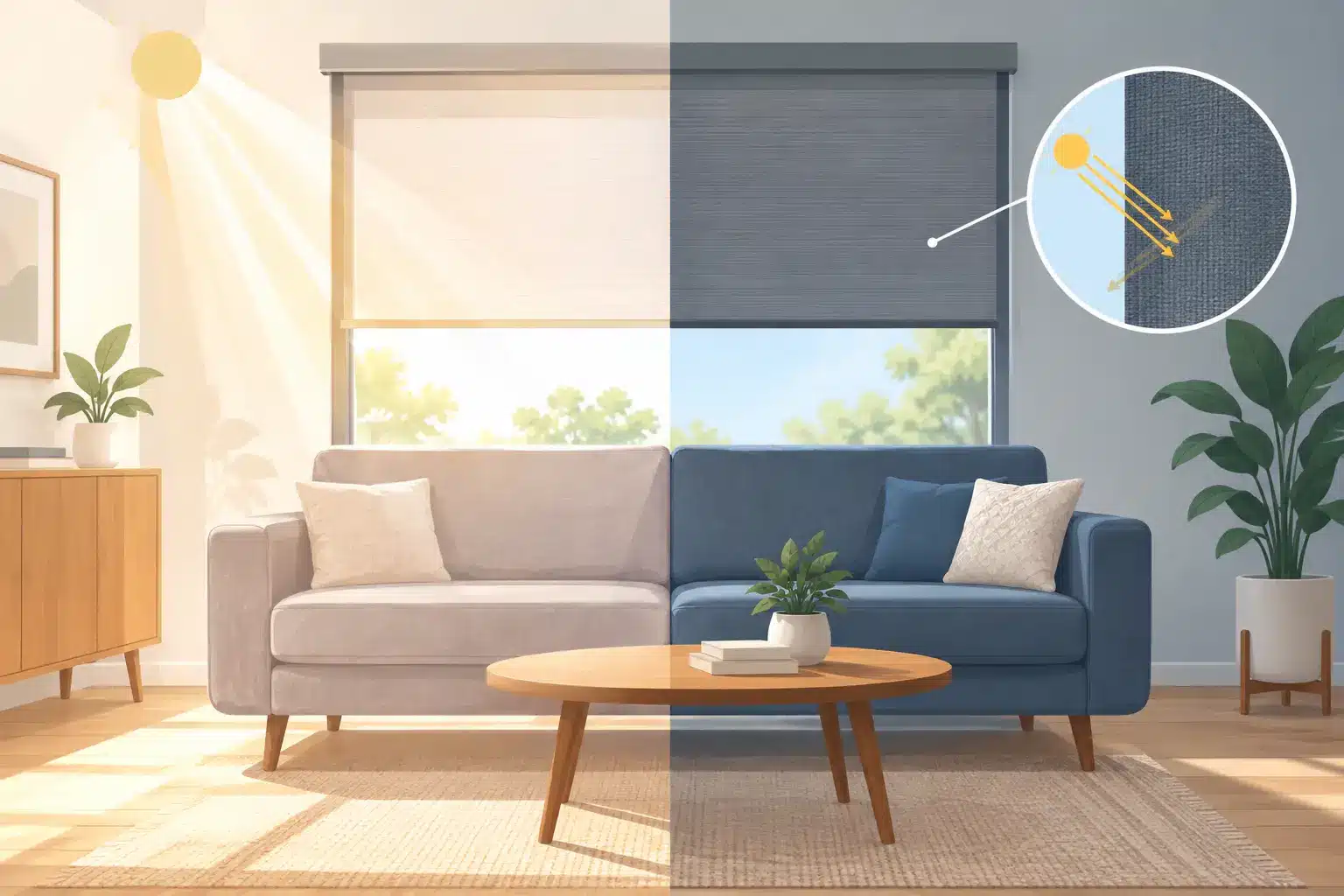
A sun-filled room is one of the best parts of living in The Woodlands. It can also be the reason a favorite sofa slowly looks lighter on one side, hardwood floors develop a pale strip near the window, or artwork loses some of its original depth. Can shades reduce furniture fading? Yes. The right custom shades can make a meaningful difference by filtering harsh sunlight before it reaches the furnishings you chose so carefully.
The key is choosing a treatment that fits the direction of the window, the amount of daily sun, and the look you want to preserve. Light control does not have to mean closing off a beautiful view or turning a bright room into a dark one.
Why sunlight fades furniture in the first place
Fading is not caused by one thing alone. Ultraviolet rays are a major contributor, but visible light and solar heat also affect fabrics, wood finishes, leather, flooring, and artwork over time. That means even windows that do not feel intensely hot can expose interiors to the kind of daily light that gradually changes color.
Texas homes often face an added challenge: long stretches of bright sunshine throughout the year. South- and west-facing windows usually receive the strongest afternoon exposure, when sunlight can be especially hard on a living room, breakfast nook, home office, or primary bedroom. Large windows and glass doors make a home feel open, but they also give sunlight a broad path indoors.
No window treatment can stop all fading forever. Materials differ in their colorfastness, and some fabrics or finishes are more sensitive than others. Still, reducing the amount of UV, light, and heat that enters a room can slow the process substantially. Think of shades as a layer of everyday protection, not a one-time cure.
Can shades reduce furniture fading without darkening a room?
They can, especially when the shade is selected for both solar performance and the way you use the room. A well-matched treatment filters or blocks the parts of sunlight that create the most concern while giving you control over how much natural light remains.
Solar shades are a popular choice for rooms with views and strong sun exposure. Their specialized fabrics reduce glare and filter UV rays while preserving a connection to the outdoors. Openness matters here. A lower openness factor generally provides more privacy and sun control, while a higher openness factor allows a clearer view and more daylight. Neither is automatically better. The right choice depends on whether your priority is preserving the view, reducing glare on a screen, protecting furnishings, or balancing all three.
Cellular shades can also be an excellent option, particularly when heat is part of the problem. Their honeycomb-shaped cells help insulate the window, which can reduce solar heat gain along with direct light exposure. They are available in light-filtering and room-darkening fabrics, allowing homeowners to choose a softer daylight effect or more complete coverage.
Roller shades, Roman shades, woven wood shades with liners, and layered shades can all contribute to furniture protection as well. The fabric, color, liner, fit, and operating position make a difference. A sheer or light-filtering material can soften intense daylight. An opaque liner can provide more protection when the sun is at its strongest. For some spaces, combining shades with decorative drapery adds flexibility and a finished, tailored look.
The details that determine how much protection you get
A shade that looks beautiful at noon may not solve the late-afternoon sun problem. That is why a few practical details deserve attention before selecting a style.
Window direction and exposure
East-facing windows receive bright morning light, while west-facing windows often get intense afternoon sun and heat. South-facing exposure can be consistent for much of the day. North-facing rooms typically receive gentler light, though reflected glare from pools, patios, or light-colored surfaces can still be noticeable.
The best treatment may vary from room to room. A solar shade may be ideal for a family room facing the backyard, while room-darkening cellular shades may better serve a bedroom where comfort and privacy are the priority.
Coverage at the edges
Even high-performing shade fabric cannot filter light that comes around the sides of the treatment. An inside-mounted shade offers a clean, built-in appearance, but it can leave small light gaps. An outside mount may provide more coverage, depending on the window and trim.
Precise measuring is especially valuable when furniture protection is a goal. Proper placement, sizing, and mounting help the treatment perform as intended while still looking polished. This is one area where professional guidance can prevent a small measurement decision from becoming an everyday frustration.
When the shades are actually used
A shade only protects a room when it is lowered or positioned to manage the sun. Motorization makes that easier. With programmable smart shades, homeowners can set schedules that lower treatments during the brightest part of the afternoon and raise them later to bring back softer evening light.
This is useful for windows that are difficult to reach, but convenience is not the only benefit. Automation can make protection more consistent, even when the house is empty or a busy day gets away from you. Child-safe cordless operation is another advantage for family spaces.
Matching the shade to the room
In a formal dining room, preserving the color of upholstered chairs, rugs, and artwork may call for a more protective fabric or lined treatment. In a home office, reducing glare on monitors can be as important as protecting a desk or wood flooring. A media room may need room-darkening shades, while a kitchen may benefit from an easy-to-clean treatment that filters light without hiding the backyard.
Color also influences the experience. Lighter fabrics often reflect more sunlight and create an airy appearance, while darker solar fabrics may improve outward visibility and reduce glare more effectively. Fabric performance varies by collection, so it is worth looking beyond color alone. A sample held against your actual window reveals far more than a small swatch viewed under showroom lighting.
For patios and outdoor living areas, exterior shades can help before sunlight reaches the glass. They can reduce glare and heat on a covered patio while also limiting direct solar exposure through adjacent doors and windows. This can be particularly helpful for rooms that open onto a sunny outdoor space.
Other ways to support your window treatments
Custom shades are a strong first line of defense, but a few habits can provide additional help. Rotate movable furniture and area rugs occasionally so exposure is distributed more evenly. Keep especially valuable artwork, photographs, and antiques out of direct sun whenever possible. Consider the placement of lamps and mirrors too, since reflected light can concentrate on a specific surface.
Window film may be another option in certain situations, but it is not a replacement for shades. Film can reduce UV and heat, yet it generally does not offer the privacy, glare control, style, or day-to-day flexibility of a custom window treatment. Some glass manufacturers also have specific recommendations about films, so homeowners should understand those considerations before proceeding.
The most effective plan usually combines the right product with the right use. If direct sunlight hits a leather chair for several hours each day, a beautiful light-filtering shade may be enough for some homeowners, while others may prefer a more protective solar fabric, layered design, or scheduled motorization.
A more confident way to choose shades for sun protection
Furniture fading happens gradually, which is why it is easy to overlook until the difference is noticeable. Choosing window treatments proactively gives you more options and helps preserve the color, texture, and finish of the pieces that make your home feel personal.
At Made in the Shade Woodlands, a free in-home consultation makes it easier to compare fabrics where they will actually be used. We will bring the showroom to you, assess the light in each room, discuss privacy and view preferences, and recommend custom options that suit your home and lifestyle. With professional measuring and installation, the finished treatment can feel as effortless as it looks.
The goal is not to shut out the Texas sunshine. It is to enjoy the warmth and beauty of natural light while giving your furnishings a better chance to stay true to the colors you fell in love with.

