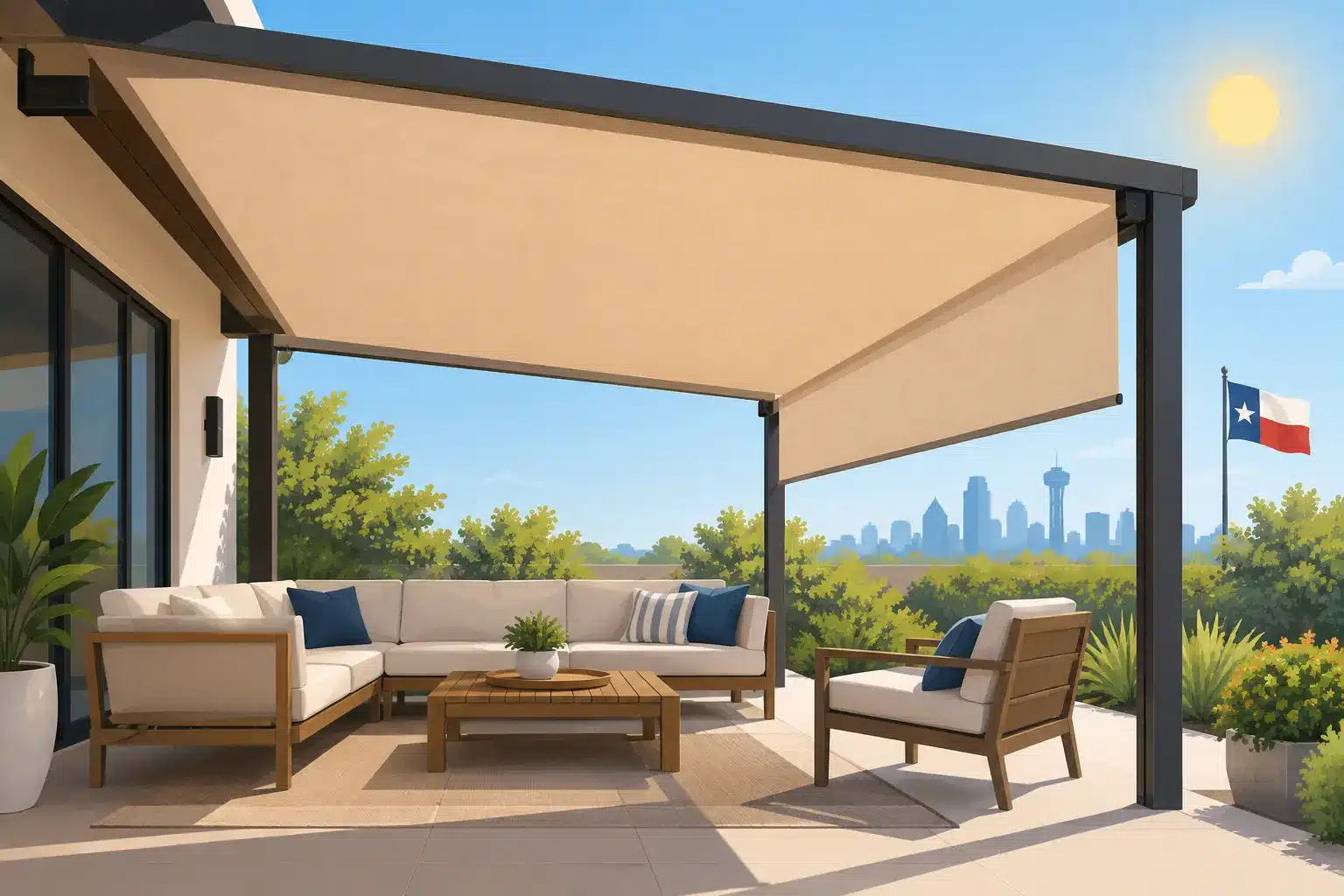
A patio can look beautiful at 9 a.m. and feel nearly unusable by midafternoon. In Montgomery County, outdoor patio shades make the difference between an outdoor space you admire from inside and one where your family can actually relax, dine, and entertain through more of the year.
The right shade system does more than block sunlight. It manages glare without closing off the view, helps reduce radiant heat, adds privacy where neighbors are close, and can create a welcome barrier against insects. The key is choosing a product designed around your patio’s exposure, structure, lifestyle, and the demanding Texas weather.
What Outdoor Patio Shades Can Change
A covered patio offers a head start, but overhead roofing rarely stops low-angle morning or afternoon sun. That is often when outdoor spaces become hottest, television screens become difficult to see, and guests start moving their chairs to find relief. Exterior shades intercept much of that sunlight before it reaches the patio, helping the space feel more comfortable without changing its open-air character.
Solar screen fabrics are especially useful for patios with a view. Their openness factor determines how tightly the material is woven: a more open weave preserves a clearer outward view, while a tighter weave provides greater privacy and shade. There is no single best choice. A pool-facing patio may call for view preservation, while a west-facing patio that receives intense late-day sun may benefit from a denser fabric.
For homes near greenbelts, water, or wooded areas, a guided shade can also help with insects. When lowered, it creates a more protected perimeter that makes outdoor meals and evening conversations far more pleasant. It will not turn every patio into a fully sealed room, but it can noticeably improve day-to-day comfort.
Choosing Outdoor Patio Shades for Your Exposure
The direction your patio faces should shape the conversation. South-facing patios receive broad, consistent sun and often benefit from shades that can be adjusted throughout the day. West-facing patios tend to face the toughest challenge in Texas: direct, low afternoon sun combined with peak outdoor temperatures. In that setting, a durable solar shade with strong UV protection is often a practical investment.
East-facing patios usually need help earlier in the day, while north-facing spaces may prioritize privacy, insect control, or occasional glare reduction more than heat management. Nearby windows, reflective pool surfaces, rooflines, and mature trees can change the equation as well. This is why measurements alone are not enough. A thoughtful recommendation accounts for how the sun moves across your exact patio.
Screen openness, color, and privacy
Fabric color affects both appearance and performance. Darker screen fabrics often provide a crisper outward view during daylight because they reduce reflected light on the fabric. Lighter colors can coordinate beautifully with a light exterior palette and may feel brighter from inside the patio, though the view through them can appear softer.
Privacy also depends on lighting. Most solar fabrics offer stronger daytime privacy when it is brighter outside than inside. At night, with patio lights on, the effect can reverse. If nighttime privacy is a primary goal, discuss fabric density, side coverage, and the way your patio is used after dark before making a final selection.
Wind and the details that protect your investment
Wind is one reason custom specification matters. A free-hanging shade may suit a protected opening, while a patio exposed to gusts may need guided tracks, cable guides, or another retention system to help keep the fabric controlled. The mounting surface, opening width, and clearance above the opening all affect what can be installed securely and cleanly.
No exterior shade should be treated as indestructible in severe weather. Raising shades before major storms and following the manufacturer’s operating guidance helps protect the system. Quality hardware, professional installation, and the right product for the opening give you a far better starting point than trying to force a one-size-fits-all solution onto a challenging patio.
Manual or Motorized Operation?
Manual outdoor shades can be an excellent fit for a smaller patio or an opening that is adjusted only occasionally. They are straightforward, attractive, and effective. But when several shades need to move together, or when the sun shifts quickly across a large entertaining area, motorization brings a level of convenience homeowners quickly appreciate.
Motorized shades can be controlled by a wall switch, remote, app, or compatible smart-home system, depending on the product selected. You can lower them before friends arrive, raise them when the breeze picks up, or adjust a group of shades without walking from opening to opening. For homeowners who use a patio often, convenience is not a luxury feature. It is what makes the shades more likely to be used every day.
Power planning matters early. Some systems can use rechargeable battery power, while others are best served by hardwired electrical connections. During an in-home consultation, a trained professional can evaluate the patio structure and available power options so the finished look remains intentional rather than improvised.
Shade Systems and Awnings Serve Different Jobs
Outdoor shades and awnings can both make a patio more comfortable, but they solve different problems. Patio shades are vertical and are best at controlling the sun that comes in from the sides. They add privacy and can help screen insects while preserving the footprint of the patio.
Awnings extend outward to create overhead coverage, making them a strong option for an uncovered deck, poolside seating area, or patio that needs protection from high sun and light rain. Some homeowners benefit from both: an awning overhead and exterior shades on the sunniest sides. The best arrangement depends on whether your biggest issue is overhead exposure, low-angle glare, or the desire for more enclosure.
Why Professional Measurement Matters Outdoors
Exterior openings are rarely as simple as they appear. Columns may not be plumb, ceiling heights can vary, brick and stucco require different mounting approaches, and doors may need specific clearance. A shade that is even slightly undersized can leave distracting gaps, while an improperly placed bracket can affect function and appearance.
Professional measurement also helps determine whether a shade should mount to the ceiling, wall, fascia, or another structural surface. The goal is a system that looks like it belongs with the home, operates smoothly, and stands up to regular use. Careful installation is particularly valuable for motorized systems, wide openings, and patios with multiple shades that should align consistently.
Made in the Shade Woodlands brings curated options directly to your home, so you can compare fabrics and finishes where the shades will actually live. Seeing samples in your patio’s natural light makes color, openness, and view-through easier to judge than they would be under showroom lighting.
A Better Way to Plan Your Patio Project
Before choosing a fabric, spend a few days noticing how you use the space. Where do people sit? When does the glare become frustrating? Do you want to keep a view open, create a more private retreat, or make outdoor dinners more comfortable? Those answers point toward the right balance of light control and visibility.
It also helps to think beyond the single hottest day of July. Quality outdoor patio shades can improve a patio on bright spring mornings, during fall football gatherings, and on mild winter afternoons when the low sun can be surprisingly intense. Choose a system that complements the architecture, handles the exposure responsibly, and feels easy enough to use whenever the weather invites you outside.
A free in-home consultation gives you room to make that decision with confidence. With the right design, your patio can stay connected to the landscape while offering the comfort and control that makes you want to linger there.

