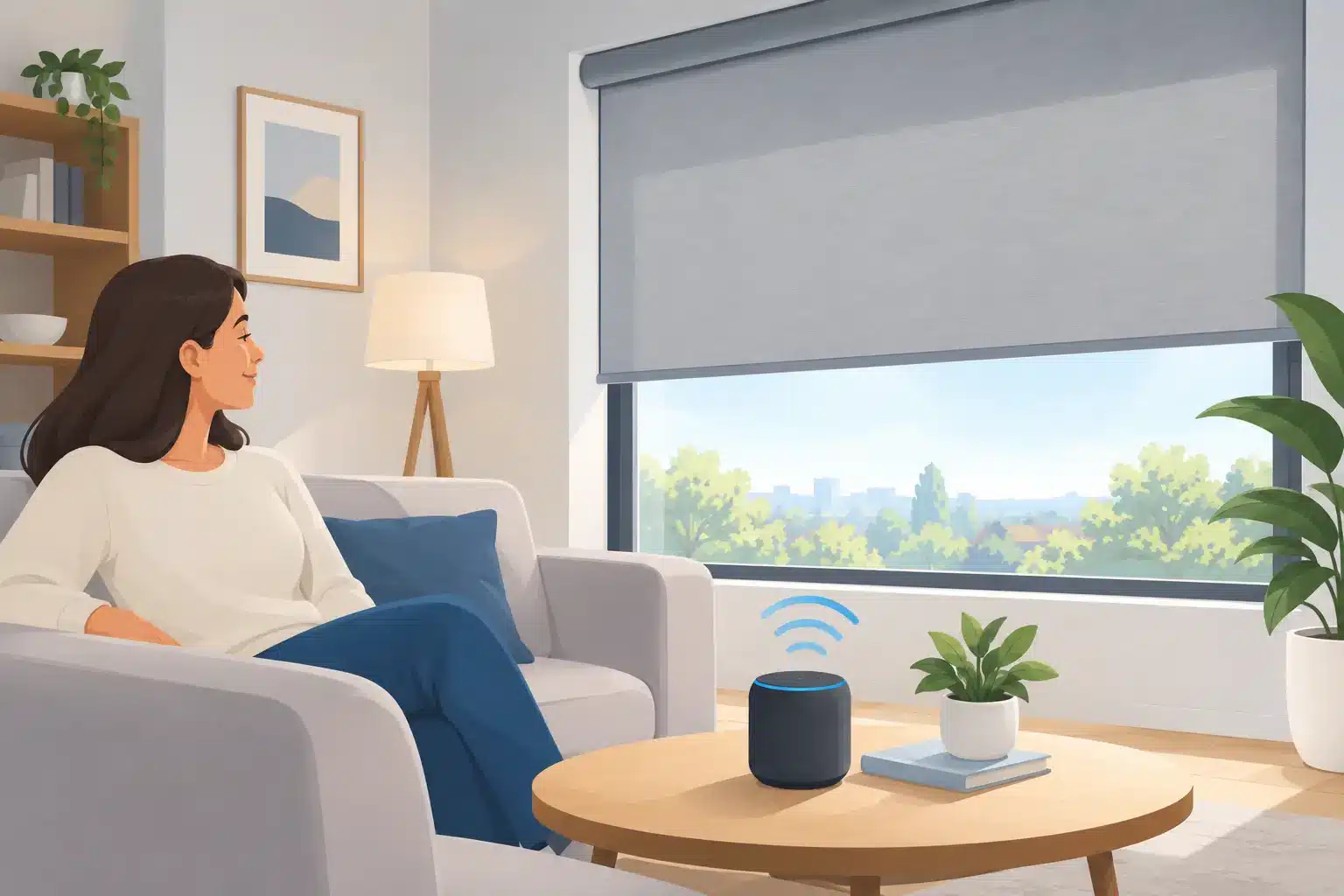
The afternoon sun can be bright enough to wash out a favorite living room, heat up a west-facing bedroom, and send everyone searching for a cooler spot. Smart shades with Alexa give homeowners a simple answer: ask for the shades to lower, set them on a schedule, or include them in a routine that fits how the room is actually used. The result feels less like another gadget and more like a home that responds to your day.
For homeowners in The Woodlands and across Montgomery County, automated window treatments can bring welcome comfort to large windows, tall stairwell glass, media rooms, sunny kitchens, and patio doors. The best results come from pairing the right shade style and fabric with the right motorization plan before anything is measured or installed.
What Smart Shades With Alexa Can Do
Alexa-compatible shades let you control motorized window treatments with spoken commands through an Alexa-enabled device. Depending on the system selected, you may also use an app, a handheld remote, wall-mounted controls, scheduled scenes, and grouped room controls.
A basic command might be, “Alexa, lower the family room shades.” More useful is a routine that handles several small tasks at once. At 8 p.m., for example, your family room shades can close for privacy while selected lights turn on. In the morning, bedroom shades can rise gradually instead of opening all at once. These routines are especially helpful for busy households, people with limited mobility, and hard-to-reach windows.
Voice control is convenient, but it should not be the only reason to choose motorization. Quiet operation, dependable programming, cordless child safety, precise light management, and easier access to tall or wide windows often matter even more over time.
Start With the Room, Not the Technology
The most successful automated shades begin with a practical conversation about the room. A beautiful sheer shade that softens daylight in a living area may not provide enough darkness for a nursery or media room. A room-darkening roller shade can be ideal for sleep, while a solar screen may be better for preserving a backyard view and reducing harsh glare.
In Texas, window direction matters. West-facing glass often needs more intentional solar control in the late afternoon. Bedrooms may need privacy and room darkening, while a breakfast nook may benefit from filtered light that keeps the space bright without the glare. For rooms with strong sun exposure, the fabric’s openness, color, and insulating qualities can all affect comfort.
Motorization works with many custom treatment styles, including roller shades, cellular shades, Roman shades, sheer shades, woven woods, and drapery. Each option creates a different visual effect. Cellular shades are often chosen for added insulation. Roller and solar shades offer clean lines and excellent glare control. Roman shades bring softness and tailored texture. Drapery can make a larger room feel finished while adding coverage and visual warmth.
A local in-home consultation makes these decisions easier because samples can be viewed where they will live. Color, texture, privacy, and light filtering can look very different in a showroom than they do beside your flooring, paint, furniture, and natural light.
Choosing Power for Alexa-Controlled Shades
Motorized shades are typically powered by rechargeable batteries, replaceable battery packs, solar charging options, low-voltage wiring, or hardwired electrical power. The right choice depends on the number of windows, access to power, the size and weight of the treatment, and whether the project is new construction, a renovation, or a single-room update.
Battery-powered shades are popular because they avoid visible cords and are often well suited to existing homes. They can be an excellent fit for standard-size windows and projects where opening walls is not desirable. The trade-off is periodic charging or battery replacement. Frequency varies with use, shade size, fabric weight, and motor type, so it is worth discussing expectations before selecting a system.
Hardwired and low-voltage solutions can make sense for larger projects, very high windows, or homeowners who prefer not to manage batteries. They are easiest to plan during construction or remodeling, though experienced professionals can assess options in finished homes as well. Solar charging can be a useful addition on suitable windows, particularly where sunlight is plentiful, but placement and exposure still need to be evaluated.
Compatibility Is More Than a Logo on the Box
Not every motorized shade connects to Alexa in the same way. Some systems communicate directly through a bridge or hub, while others use a manufacturer app that links to Alexa. Wi-Fi strength, router location, and the number of connected devices can affect performance, especially in larger homes.
Before installation, it helps to decide how you want the shades organized. Naming each treatment clearly prevents confusion later. “Kitchen left shade” may be technically accurate, but “Kitchen windows” is easier to remember and say. Grouping shades by room, floor, or activity makes routines much more natural.
A good setup also considers what should happen when technology is not in use. Remote controls and manual app controls offer convenient backups. For bedrooms, guest rooms, or homes with multiple family members, simple controls are often appreciated even when voice commands are available.
Privacy also deserves a brief thought. Alexa routines require a connected smart-home environment, so use strong Wi-Fi passwords, keep apps updated, and review device permissions. The goal is not to make the system complicated. It is to set it up thoughtfully, then let it fade into the background.
Everyday Routines That Feel Worth It
The most useful routines are usually the least flashy. Rather than automating every movement, focus on the moments when light, privacy, or heat regularly gets in the way.
For example, a morning routine can raise kitchen and living room shades while leaving bedrooms closed for anyone still sleeping. A “movie time” command can lower the media-room shades to reduce screen glare. During the hottest part of the day, solar shades can lower on sun-facing windows to make a room more comfortable without making it feel closed off.
Privacy routines are equally valuable. Shades can close around dusk in front-facing rooms, or a whole-home “goodnight” command can lower bedroom and bathroom shades together. If your home has a patio or outdoor living area, motorized exterior shades can also help manage sun and glare, although their smart-home compatibility and weather requirements should be specified separately.
Schedules should support real life, not force the household into a rigid pattern. Seasonal daylight changes, school schedules, travel, and guest routines may call for adjustments. A flexible system that is easy to revise will serve you better than an elaborate setup nobody wants to maintain.
Why Custom Measurement and Installation Matter
Smart shades involve more than selecting a fabric and adding a motor. Window dimensions, mounting surface, trim depth, stack height, power access, shade weight, and the placement of brackets all influence how the finished treatment looks and performs. A small measuring error can create light gaps, interfere with a handle, or leave a treatment looking out of proportion.
Professional installation also protects the details that homeowners notice every day: level alignment across multiple windows, smooth operation, cleanly placed charging or power components, and properly programmed controls. It is particularly valuable for oversized windows, layered treatments, specialty shapes, and motorized drapery.
At Made in the Shade Woodlands, we bring the showroom to you with a free in-home consultation. You can compare fabrics in your own light, talk through Alexa compatibility and power options, and receive guidance built around your home rather than a one-size-fits-all package. Precise measurements and professional installation help make the finished result feel intentional from the first command.
Questions to Ask Before You Choose
Ask whether the selected motorization system works with your existing Alexa setup and whether it needs a hub or bridge. Confirm the available control methods, expected battery maintenance, warranty coverage, and whether shades can be grouped into rooms and routines. If you are considering several windows, ask how the system will scale as you add treatments later.
It is also wise to talk about fabric performance before focusing on automation. Alexa can lower a shade, but it cannot turn a light-filtering fabric into a blackout solution or make an overly dark fabric preserve a bright, open feeling. The treatment itself must solve the room’s light, privacy, and design needs first.
A well-planned smart shade system should feel quiet, useful, and easy to live with. When the fabric, power method, controls, and installation are chosen for your home, a simple “Alexa, close the shades” can become one of those small daily comforts you would not want to give up.

