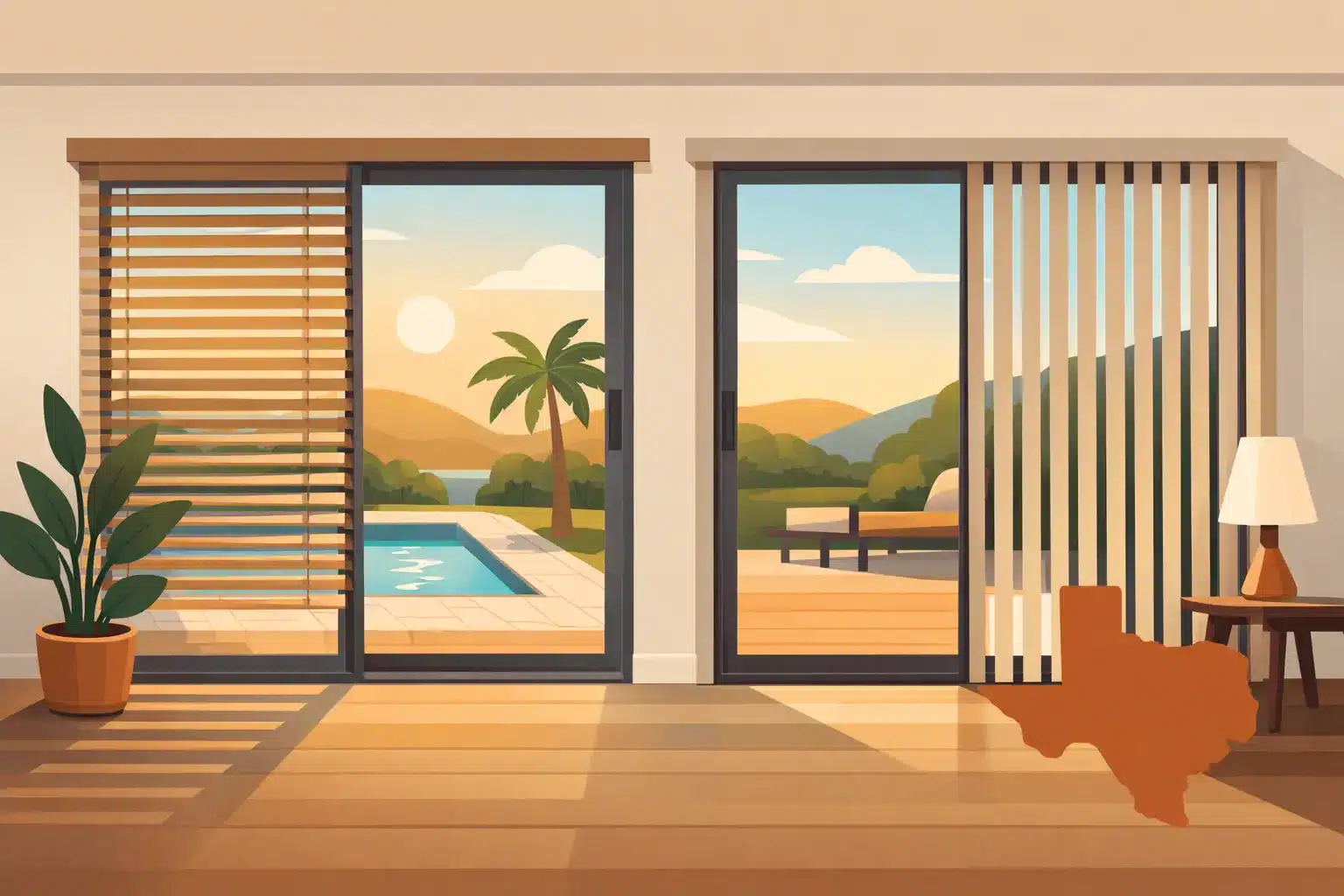
A sliding glass door can be one of the most enjoyable features in a Texas home – until afternoon sun turns the room into a glare-filled hot spot or an awkward window treatment makes it harder to step outside. The best blinds for sliding doors need to do more than look attractive. They should move easily, give you privacy when you want it, manage heat and UV exposure, and suit the way your family uses the door every day.
For homes in The Woodlands, Conroe, Magnolia, and throughout Montgomery County, the right answer often comes down to the door’s location, its orientation, and how much of the view you want to preserve. A patio door in a busy family room has different needs than one leading from a primary bedroom or dining area. Custom sizing and professional installation make a meaningful difference, especially on wide openings where small measurement errors are easy to see.
What Makes a Sliding Door Treatment Work Well?
Sliding doors operate side to side, so their window treatments should generally do the same. Coverings that open vertically or pull sideways keep the doorway practical and prevent fabric or slats from getting caught in the traffic path. They also need enough clearance for door handles, locks, and trim.
Light control matters just as much. South- and west-facing glass can introduce intense heat and fading UV rays, while large panes of glass can feel exposed after dark. The ideal treatment lets you adjust the room throughout the day rather than forcing a choice between a dark room and an uncovered door.
Finally, consider the stack. Every sliding-door covering gathers to one or both sides when open. On a beautiful patio or pool view, a compact stack keeps more of that view visible. On a door where one panel is used more often, the treatment should stack away from the active side whenever possible.
Best Blinds for Sliding Doors: Top Options to Consider
Vertical blinds for practical, flexible coverage
Vertical blinds remain a smart option for wide sliding doors because they were designed to move in the same direction as the door. Their vanes rotate for adjustable light and privacy, then draw to the side for clear access to the patio. Today’s custom vertical blinds are far removed from the basic versions many homeowners remember. Softer textures, refined colors, patterned fabrics, and durable materials can give them a much more tailored appearance.
They are particularly useful in high-traffic spaces, rental properties, and homes where easy operation is the priority. Vinyl and composite vanes are simple to maintain, while fabric options can soften a room with a more decorative finish. The trade-off is that individual vanes can be affected by wind when the door is open, and the look may not be the best fit for every formal interior.
Panel track blinds for wide, modern openings
Panel track blinds are one of the most polished choices for contemporary homes with broad sliding glass doors. Instead of individual vanes, they use wide fabric panels that glide on a track and stack neatly when open. The result is clean, architectural, and well suited to open-concept living rooms.
Because the panels are substantial, panel tracks can bring a sense of order to a large expanse of glass. Choose a solar screen fabric for filtered daylight and view preservation, or a room-darkening fabric for greater privacy and glare reduction. Many homeowners appreciate that the panels remain flat and calm rather than moving individually in the breeze.
The main consideration is stacking space. A panel track needs room beside the door for its panels to gather. During an in-home consultation, the mounting location and stack direction can be planned around nearby walls, furniture, and the door panel your household uses most.
Vertical cellular shades for insulation and softness
For homeowners concerned about energy efficiency, vertical cellular shades are often an excellent fit. Their honeycomb-shaped cells trap air, adding insulation across a large glass opening that can otherwise transfer heat into the home. That makes them especially appealing for sunny Texas exposures and rooms that struggle with temperature swings.
Vertical cellular shades open and close sideways, making them naturally compatible with sliding doors. They have a softer, more streamlined look than traditional vertical blinds and are available in light-filtering and room-darkening opacities. Some styles can be ordered with configurations that allow access through either side, which is helpful when both door panels are used.
This category is a strong choice for bedrooms, media rooms, and living areas where comfort and a quieter visual effect matter. The trade-off is that cellular fabrics are more delicate than hard vanes, so they benefit from thoughtful placement and careful operation in very active spaces.
Sheer vertical shades for filtered light and a refined view
Sheer vertical shades pair soft fabric vanes with sheer panels, creating a graceful alternative to standard blinds. With the vanes open, daylight filters through the sheers and the outdoor view stays visible. Rotate the vanes and you gain more privacy and light control without the harder lines of a traditional blind.
This option works beautifully on doors overlooking a landscaped yard, covered patio, or pool area. It gives the room a light, elegant feel while still providing functional coverage for a large glass opening. If the door receives direct late-day sun, selecting the right fabric opacity is essential. A consultant can help balance the desire for a bright room with the need for glare and UV protection.
Drapery panels when the room calls for warmth
Although they are not blinds, custom drapery panels deserve consideration for sliding doors, especially in formal dining rooms, bedrooms, and layered living spaces. They can be drawn open or closed easily and bring color, texture, and softness that hard treatments cannot always provide on their own.
Drapery can also be paired with a shade or blind for more control. For example, a solar shade may handle daytime glare while stationary drapery panels frame the door and add a finished design detail. Full drapery provides excellent privacy and can help with light blocking, but fabric must be selected and positioned carefully so it does not interfere with the door’s daily use.
Match the Treatment to How You Use the Door
The best choice is rarely just about appearance. Start by noticing how the door functions in your home. A family that lets the dog out dozens of times a day may prefer durable vertical blinds or a conveniently operated panel track. A primary bedroom may benefit more from room-darkening cellular shades or lined drapery. For a living room with a favorite backyard view, sheer vertical shades or solar panel tracks can reduce harsh light without closing off the landscape.
Motorization is also worth considering for tall, wide, or frequently used doors. With smart-home-compatible controls, you can adjust the treatment by remote, wall control, app, or scheduled settings, depending on the product. Programming a shade to close during the hottest afternoon hours can improve comfort without becoming another task on your daily list. For households with children and pets, cordless and motorized options also reduce concerns about accessible operating cords.
Details That Matter Before You Order
A sliding-door treatment should be measured as a complete system, not as a simple piece of fabric or a set of slats. Mounting height, side clearance, trim depth, handle projection, and the location of adjacent windows all affect how the finished treatment will look and operate. Door hardware can create an unexpected conflict if it is not accounted for early.
Color and material deserve close attention, too. White and light neutral treatments can keep a room airy and reflect heat, while darker fabrics may offer a more dramatic design statement but can visually frame the glass more strongly. For sun-facing doors, fabrics with UV control can help protect flooring, furnishings, and artwork from fading.
It is also helpful to think beyond the door itself. When a sliding door sits beside large windows, coordinating treatments can make the entire wall feel intentional. That does not mean every covering has to match exactly. It means the colors, textures, and operating styles should work together rather than compete.
Why Professional Measurement Pays Off
Large glass doors are highly visible, and they leave little room for uneven tracks, gaps at the edges, or a treatment that stacks in the wrong place. Professional measurement helps ensure the product is specified for the actual opening, not a rough estimate. It also gives you an opportunity to compare materials in your home’s natural light, against your flooring, paint, and furnishings.
Made in the Shade Woodlands brings curated samples and design guidance directly to your home, then handles precise measuring and professional installation. It truly couldn’t be easier: you can see how the choices perform in the space where they will live, rather than trying to picture them from a showroom display.
A sliding door should make your home feel more open, not more complicated. Choose a treatment that respects the view, handles Texas sun with confidence, and makes every trip to the patio feel effortless.

